Technology
Bodenxt: The Green Transition Platform Powering Boden’s 20-Year Development Leap

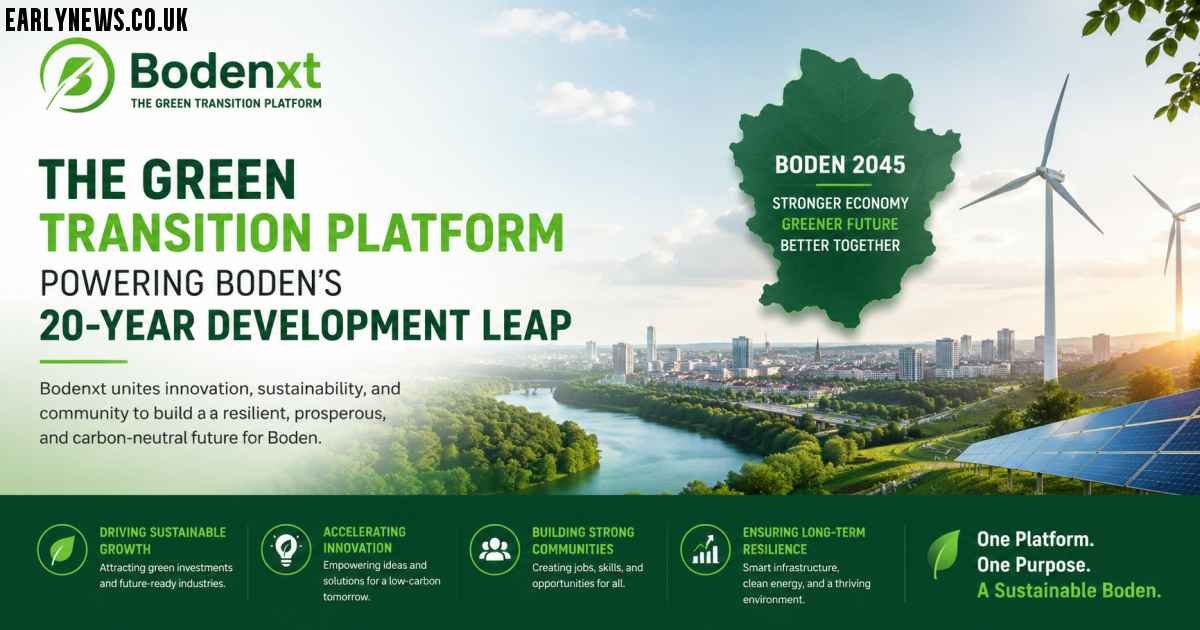
Sweden’s northern city of Boden is undergoing one of Europe’s most ambitious green industrial transformations. At the center of this change is Bodenxt, a large-scale coordination platform launched by the Municipality of Boden to guide rapid growth driven by the expansion of Stegra, formerly known as H2 Green Steel. What would normally take two decades of urban development is now happening within just a few years.
Bodenxt is not simply a construction or infrastructure project. It is a complete societal transformation designed to connect housing, workforce development, education, infrastructure, sustainability, innovation, and citizen dialogue into one long-term strategy. The goal is to create a smart, inclusive, and environmentally sustainable city that supports future generations while becoming a global hub for green industry.
As of 2026, Bodenxt has become one of Sweden’s most closely watched examples of how municipalities can manage rapid industrial growth without sacrificing quality of life, environmental responsibility, or community participation.
What Is Bodenxt? The Coordination Platform Behind Boden’s Green Future
What Is Bodenxt? The Coordination Platform
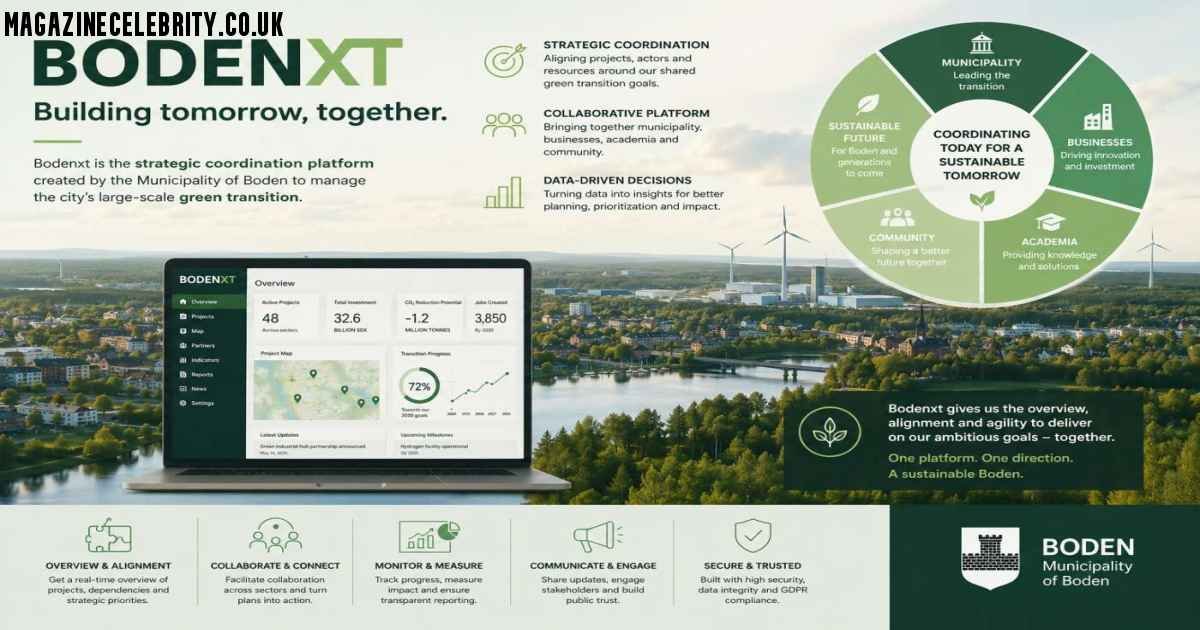
Bodenxt is best described as a strategic coordination platform created by the Municipality of Boden to manage the city’s large-scale green transition. The rapid industrial growth triggered by Stegra’s green steel production facility has accelerated population growth, infrastructure demands, and economic activity across the region.
Instead of allowing development to happen in disconnected parts, Bodenxt brings everything together under a unified vision. Municipal departments, education providers, construction firms, business organizations, industry leaders, and local citizens collaborate through the platform to ensure growth remains sustainable and organized.
The municipality describes the mission clearly:
“Bodenxt is the platform for our major green transition of the entire society in Boden. Stegra’s establishment is an important accelerator, and at the Municipality of Boden, we have stepped up our efforts to create something smart and green that will last for many generations to come.”
This transformation is heavily linked to the rise of green steel production, a manufacturing process designed to dramatically reduce carbon emissions compared to traditional steelmaking. Because Stegra’s operations are expected to produce millions of tons of fossil-free steel annually, Boden is now attracting global attention from investors, engineers, sustainability experts, and skilled workers.
Bodenxt ensures that this industrial boom benefits the entire community instead of creating pressure on housing, transportation, schools, and public services. The platform acts like the operating system behind Boden’s future city planning.
The Five Core Sub-Projects Driving Bodenxt’s Development
The Five Core Sub-Projects Driving Bodenxt’s Development
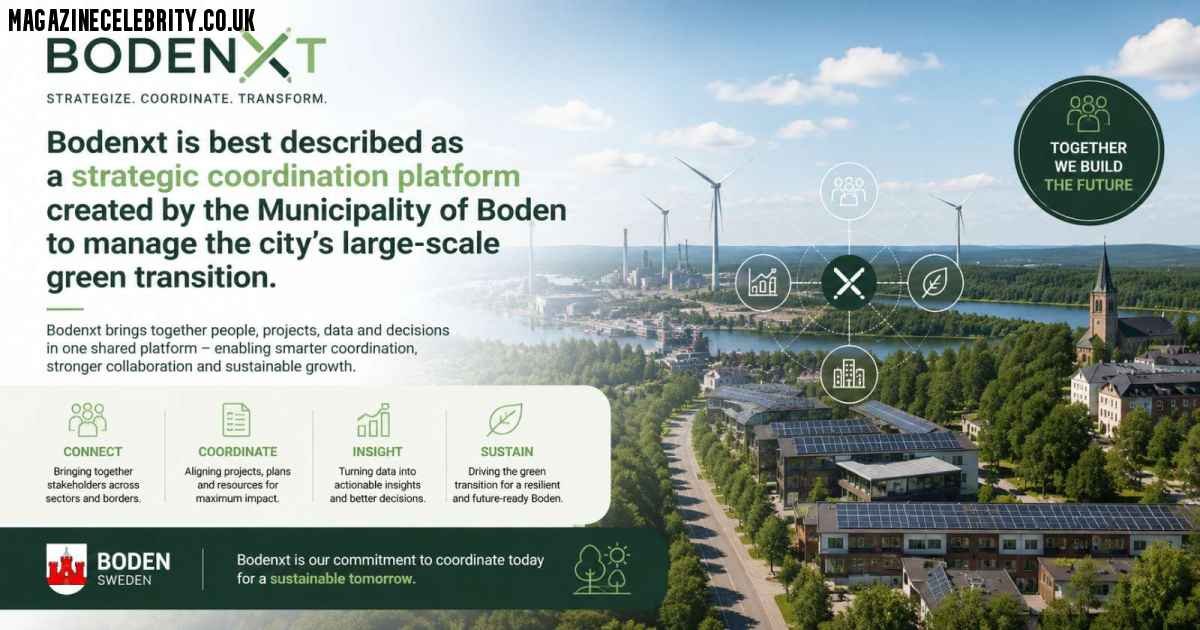
To manage growth equivalent to nearly 20 years of expansion, Bodenxt operates through five major sub-projects. Each pillar focuses on a critical part of society while remaining connected to the larger sustainability vision.
1. Skills Supply
The industrial transition requires thousands of new workers with expertise in green technology, engineering, digital systems, and advanced manufacturing. Bodenxt coordinates workforce development programs, partnerships with schools, and training opportunities to ensure businesses can access skilled labor locally and internationally.
2. Living and Housing
Housing demand in Boden is rising rapidly as workers and families relocate to the region. The municipality is preparing large-scale residential expansion projects, contractor accommodations, and innovative housing solutions to support population growth.
3. Business Development
Bodenxt supports local entrepreneurship and innovation through partnerships with organizations such as Boden Business Park, helping small and medium-sized businesses adapt to the green economy.
4. Infrastructure Above Ground
Roads, bridges, railways, public areas, and recreational spaces are all expanding. A newly developed bridge connecting Södra Svartbyn and Gruvberget has already become an important public space for pedestrians, joggers, families, and snowmobile riders.
5. Infrastructure Below Ground
Modern cities require reliable utilities, energy systems, water networks, and digital connectivity. Bodenxt coordinates upgrades to underground infrastructure to ensure long-term sustainability and resilience.
The municipality summarizes its identity powerfully:
“We are the green heart of northern Sweden, where industry and commerce interact in a unique ecosystem which attracts talent from all over the world.”
Housing and Population Growth: Building Boden for 33,000 Residents
One of the biggest challenges connected to Boden’s rapid growth is housing. The municipality expects the population to rise significantly by 2030, targeting approximately 33,000 residents as new industries create thousands of jobs.
To prevent housing shortages, Bodenxt has already launched several major projects. Planning approvals, consultations, and development processes are progressing rapidly under the leadership of planning officials including Ellinor Isaksson Larsson, Planning and Development Manager.
Several housing initiatives are already underway:
| Housing Initiative | Purpose |
|---|---|
| Contractor housing at Slipvägen 1 and Nylandsbäcken | Temporary accommodations for project workers |
| Tjärnbacken development | 200 new homes built by Lindbäcks and Cederfors |
| Visioner i norr project | Transforming deserted buildings into modern housing |
| Citizen-led neighborhood planning | Improving residential attractiveness and sustainability |
The Visioner i norr initiative has gained particular attention for its creative approach. Instead of abandoning older structures, national design teams are reimagining deserted houses into functional living spaces. This reduces waste while preserving local character.
Community involvement also plays a major role. Boden uses structured citizen dialogues throughout development planning to ensure neighborhoods remain safe, attractive, and socially connected.
According to Mats Berg, Head of Economic Development:
“Our residential areas need to be taken into the future and be attractive.”
The long-term vision known as “The Good Life” focuses not only on population growth but also on quality of life, social interaction, nature access, and recreational opportunities.
Business Innovation and SEK 44 Million in SME Support
Boden’s business environment continues to rank highly in Sweden, and Bodenxt is helping local companies benefit from the green industrial transition.
Through a partnership involving Boden Business Park and Vinnova, small and medium-sized enterprises can apply for innovation funding totaling SEK 44 million.
Eligible businesses can receive:
- Up to SEK 100,000 for business development
- Up to SEK 400,000 for infrastructure investments
- Support for innovation and intangible assets
This funding creates opportunities for local companies to modernize operations, adopt sustainable technologies, and expand alongside Stegra’s industrial ecosystem.
According to Michaela Strömberg, business developer at Boden Business Park:
“It is a fantastic opportunity that we are able to support companies together in their business development and innovation journey.”
The initiative also involves regional innovation partners including:
- Piteå Science Park
- Arctic Business
- Luleå Science Park
- Skellefteå Science City
By strengthening entrepreneurship and local business participation, Bodenxt ensures economic growth spreads beyond large corporations and into the broader regional economy.
Education and Global Talent Development in Boden
The success of a green industrial city depends heavily on education and talent attraction. Bodenxt directly links industrial expansion with educational opportunities to create a future-ready workforce.
A major milestone came when Björknäsgymnasiet received authorization to offer the prestigious International Baccalaureate Diploma Programme (IBDP).
This globally recognized educational program helps students develop:
- Academic excellence
- Critical thinking
- Intercultural understanding
- Entrepreneurial skills
- International career readiness
According to Nina Berggren, diploma program coordinator:
“A degree from IBDP opens doors to new opportunities nationally and internationally.”
The IB program aligns perfectly with Boden’s ambition to attract skilled workers and families from around the world. As international professionals relocate to Boden for opportunities in green industry, access to high-quality education becomes increasingly important.
The city is positioning itself not only as an industrial center but also as a knowledge-driven community where innovation, sustainability, and education work together.
Green Infrastructure: Railways, Hydrogen, and Sustainable Urban Growth
Infrastructure development under Bodenxt goes far beyond roads and buildings. The city is investing heavily in sustainable transportation, environmental restoration, and climate-friendly technology.
Several major projects are already completed or underway:
| Infrastructure Project | Status |
|---|---|
| New public bridge between Södra Svartbyn and Gruvberget | Completed |
| 6-kilometer railway with 10 bridges | Under construction |
| Boden Industrial Park expansion | Ongoing |
| Arctic Botanic Garden feasibility study | Planned |
| Green hydrogen lake restoration research | Under evaluation |
One of Sweden’s fastest railway projects is currently being built in Boden, delivering 6 kilometers of railway infrastructure and 10 bridges within just 20 months. This demonstrates the extraordinary speed of development occurring in the region.
Environmental sustainability also remains central. Researchers are exploring how green hydrogen technology could improve lake ecosystems and support environmental restoration efforts.
Government officials visiting the area have described the scale of Boden’s development as “powerful,” particularly regarding workforce planning, housing expansion, and infrastructure coordination.
Citizen Dialogue and the Long-Term Sustainability Vision
What makes Bodenxt different from many large industrial projects is its emphasis on public participation. Citizens, local organizations, and associations are actively involved throughout the planning process.
The municipality believes sustainable development must include social sustainability alongside economic growth. Structured dialogue sessions allow residents to shape the future of neighborhoods, recreational spaces, housing priorities, and public services.
According to Mats Berg:
“As a municipality, working in this structured way to develop existing residential areas is quite unique.”
This approach ensures that growth benefits both existing residents and newcomers. Instead of becoming a company-driven industrial zone, Boden aims to preserve community identity while expanding globally.
The economic value generated by Stegra’s green steel operations is expected to reach billions, even before full production capacity begins. Bodenxt’s role is to translate that industrial success into tangible quality-of-life improvements for residents.
Conclusion: Why Bodenxt Matters in 2026
In 2026, Bodenxt stands as one of the most ambitious examples of coordinated green urban transformation in Europe. By integrating housing, education, infrastructure, innovation, sustainability, and citizen participation, the Municipality of Boden is creating a scalable model for future industrial cities.
The platform demonstrates that rapid economic growth and environmental responsibility can work together when development is strategically coordinated. As Stegra’s green steel production expands and thousands of people relocate to Boden, the city continues building a future centered on The Good Life — a vision where technology, sustainability, and community thrive side by side.
Key Facts About Bodenxt in 2026
| Category | Details |
|---|---|
| Launched By | Municipality of Boden |
| Main Industrial Catalyst | Stegra (formerly H2 Green Steel) |
| Population Goal | 33,000 residents by 2030 |
| Major Focus Areas | Skills, housing, business, infrastructure |
| Innovation Funding | SEK 44 million |
| Official Website | bodenxt.se |
| Contact | bodenxt@boden.se / +46 921 620 00 |
Boden is no longer simply a northern Swedish municipality. Through Bodenxt, it is becoming a global case study in how green industrialization can reshape an entire society for generations to come
SEO
Driving E-Commerce Conversions: Combining Dynamic Promotions and High-Speed Navigation in Magento 2

In a highly competitive digital retail landscape, modern e-commerce stores must balance two critical operational goals: increasing Average Order Value (AOV) and reducing customer friction during product discovery. When online shoppers encounter slow-loading search filters or rigid, uninspired promotional structures, bounce rates rise and potential sales are lost.
Building a flexible, high-converting storefront on Adobe Commerce requires extending default platform capabilities with enterprise-grade architectural modules. As a recognized leader in the Adobe Commerce ecosystem with over a decade of technical innovation, Amasty provides specialized extensions engineered to optimize store performance, automate marketing promotions, and streamline catalog navigation.
- Incentivizing Cart Value with Targeted Promotional Logic
Promotions serve as powerful drivers for customer acquisition and retention. While simple percentage discounts can erode profit margins, structured promotional offers—such as automatically adding promotional items or offering tiered bundles—encourage shoppers to add higher-margin SKUs to their cart.
┌───────────────────────────────────────────────────────────────────────────┐
│ PROMOTIONAL CART CONVERSION PIPELINE │
├───────────────────────────────────────────────────────────────────────────┤
│ Customer Meets Cart Subtotal ──► Triggers Automated Rule Evaluation │
│ │ │
│ ▼ │
│ Rule Match Confirmed ──► Auto-Injects Free Gift / Tiered BOGO │
│ │ │
│ ▼ │
│ Checkout Stream Updated ──► Displays Instant Savings & Perks │
└───────────────────────────────────────────────────────────────────────────┘
Deploying tailored promotional campaigns—such as a buy one get one free magento 2 promotion—allows merchants to clear seasonal inventory, introduce new product lines, and boost cart totals without manually managing promotional coupon distribution.
Strategic Conversion Triggers:
- Automated Gift Auto-Add:Automatically insert a free gift directly into the customer’s cart as soon as specific subtotal, category, or brand thresholds are reached.
- Tiered Volume Rewards:Trigger “Buy X, Get Y Free” or “Buy 2 Get 1 at 50% Off” logic dynamically as buyers adjust line-item quantities.
- Customer-Specific Rule Rules:Restrict promotional rules to specific customer groups (e.g., VIP tiers or wholesale buyers) to protect profit margins.
- Eliminating Catalog Friction with Fast Filtering
A high-converting promotional engine only succeeds if shoppers can quickly locate products within your catalog. Traditional layered navigation systems require full page reloads every time a user checks a filter box—such as size, color, brand, or price range. These frequent page reloads disrupt the shopping flow and increase mobile cart abandonment.
[User Selects Filter Attributes] ──► [Background AJAX API Call] ──► [Instant Grid Update Without Reload]
Implementing magento 2 ajax layered navigation replaces disruptive reloads with seamless, asynchronous data updates. Category pages update instantaneously as shoppers select multiple attributes, creating a responsive app-like experience across desktop and mobile screens.
Core UX & Technical Advantages:
- Multi-Filter Selection:Allow visitors to choose several attributes (e.g., Blue, Size L, In Stock) simultaneously before submitting the request, preventing unnecessary database calls.
- SEO-Friendly URL Structure:Automatically generate canonical, search-engine-readable URLs for filtered result pages, keeping SEO equity intact while improving user experience.
- Visual Swatches & Price Sliders:Replace boring text links with interactive color swatches, visual brand logos, and smooth price range sliders.
- Structural Comparison: Standard Magento vs. Amasty Optimized Architecture
Comparing default platform features against customized Amasty modules illustrates why enterprise stores invest in specialized extension architecture.
| E-Commerce Dimension | Default Magento 2 Capabilities | Amasty Enhanced Extension Architecture |
| Promotional Logic | Basic coupon rules; rigid “Buy X Get Y” setups. | Automated BOGO & Gifts: Multi-condition rules, auto-added items, and custom cart messages. |
| Catalog Filtering | Requires full page reload on every attribute click. | Instant AJAX Rendering: Asynchronous updates, multi-select capability, and custom swatches. |
| Mobile Responsiveness | Sluggish filtering on mobile networks due to page reloads. | App-Like Flow: Fast slide-out filter panels and responsive AJAX updates. |
| SEO Optimization | Filtered pages can create duplicate content issues. | Clean URL Routing: Automatic AJAX URL rewriting and indexation control. |
- Engineering Quality and Ecosystem Authority
Extending Adobe Commerce requires strict adherence to core platform standards. Poorly coded third-party modules can slow down database queries, conflict with custom themes, or break during core platform updates.
With deep technical experience in Magento engineering, Amasty builds solutions focused on security, speed, and long-term stability:
- Clean API Architecture:Modules interact seamlessly with core Magento service contracts without overriding native code classes.
- High-Concurrency Performance:Optimized database queries and caching integration ensure fast page loading even during high-traffic promotional events.
- Full Adobe Commerce Compatibility:Solutions scale effortlessly across cloud environments, supporting multi-store, multi-currency, and international store setups.
Conclusion: Elevating the Digital Shopping Experience
Building a successful e-commerce business requires combining fast catalog discovery with compelling promotional incentives. By deploying dynamic promotional rules and high-speed AJAX layered navigation, online retailers create a seamless, high-converting buyer journey that drives long-term revenue growth. Partnering with established ecosystem experts like Amasty provides the architectural foundation needed to turn complex e-commerce goals into sustainable online success.

Introduction
The Murton by-election 2026 was a pivotal moment in County Durham politics, with Labour making a dramatic comeback from Reform UK to win the ward back from the opposition party. It is viewed as an early sign that Labour is regaining its traditional strongholds in the North East of England and Reform UK is under the microscope having surged in the last election cycle.
Election Result Overview
The results of Murton By-Election: Labour Reclaims the Ward are out.Murton By-Election Result: Labour Reclaims the Ward has been announced.
Labour secured 50.6% of the votes, ahead of Reform UK which was granted 39.6% in the closely fought Murton by-election. This was the biggest swing towards Labour, which resulted in an 11.2% change from Reform, since the ward won Reform’s historic 2025 result. A turnout of 24.9% was lower than the 29.1% achieved in the 2025 local elections, typical of the lower engagement in by-elections. The victory has left Labour with five seats on Durham County Council, having struggled all year.
The relative importance of Murton in County Durham politics
Murton is not just a local electoral ward, it has a strong political significance. Murton had been a regular seat of Labour since records began in 1973, as had been the case for a long time in the area. But Reform UK gained ground in 2025 when it won both seats, putting an end to over 50 years of Labour domination. This outcome came as a surprise to local political observers and represented a trend in public opinion. The 2026 by-election win has since brought the Labour Party back into power, here making Murton a symbolic flash point in the fight for supremacy between Labour and Reform UK.
Julie Griffiths: behind the scenes of Labour’s Comeback
One of Labour’s key figures was Julie Griffiths, who was previously a councillor and had been defeated by Reform UK in their big 2025 success. In 2026, Griffiths was again standing, and he won it back, providing Labour with a strong story of recovery and resilience. Her victory was more than a seat win; it was a return of local leadership to which voters had been accustomed for decades. Her achievement proved the value of recognisable local candidates who had local connections and were important in the constituencies where they stood in the most politically unstable areas, particularly in Labour’s case.
The New Radical Reform Movement and the Political Context In 2025
In the context of Reform UK’s breakthrough in 2025, the Murton result is more understandable. In that year, Reform had made impressive strides in County Durham, taking only four seats on the council – the lowest number for any party since they set up base there. Murton’s victory was part of that broader trend, and represented a shift in the voting habits. Some analysts interpreted this victory as a protest vote due to the disillusionment with the mainstream parties. This change is not necessarily for the long term, though, as the 2026 by-election result indicated, for instance in parts of the country with a long Labour tradition.
The Political Mood and Voter Shifts 2026.Voter Shifts and the 2026 Political Mood
In Murton there was a significant swing back to Labour, with the party gaining 11.2% of the vote. Labour’s ability to clear the majority bar at 50.6% indicates the beginnings of a revival in trust among traditionalists, although Reform UK have not been far behind with 39.6%. Low turnout (24.9%) is identified as one of the reasons, implying that both parties had to concentrate on their core voters. But this was a more solid victory for Labour’s own voters. The result also demonstrates the significance of local candidates, campaign focus and voter participation in the result for smaller elections.
County Durham’s Wider Political Landscape in 2026
Murton is not the only politician to have had a rethink in County Durham and in the North East. As the shifts in 2025 were so dramatic, the election of Reform UK’s result was wondered as to whether it was a long-term shift or a protest vote. This kind of political turbulence has been seen at other Northern councils where party loyalty has been put to the test. Labour’s Murton victory offers early signs of recovery, but the area is still a political hot-seat with voters still re-evaluating their priorities.
The Murton Result and the future of elections
The Murton by-election 2026 will have significance in the context of the upcoming local elections in May 2026. The win is a boost for Labour, with a tried and tested approach of running local, known figures such as Julie Griffiths. The loss has raised questions for Reform UK about how they will maintain support following their quick electoral success. The outcome also serves as an illustration of a wider issue on the political landscape in the UK today: there is no such thing as a safe seat and voters’ allegiance could change greatly in an election cycle.
Key Facts: Murton By-Election 2026
Start of term: 2026 (after 2025 council elections)
The County of Durham’s governmental body.The governing body of Durham County Council.
Winner: Labour – Julie Griffiths
Vote Share: Labour 50.6%, Reform UK 39.6%
Swing: 11.2% from Reform to Labour
Turnout: 24.9%
The significance: First Labour victory in Murton since Reform’s breakthrough in 2025 which ended 50 years of Labour domination
Conclusion
The Murton by-election has become a pivotal moment in County Durham’s political journey, reflecting the resurgence of Labour and the ongoing dynamics of local UK politics in 2026.