Auto
Who Pays When an Uninsured Driver Causes an Accident?

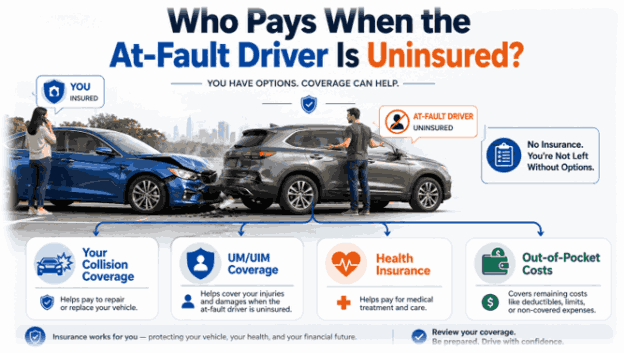
An uninsured driver can cause the same injuries and property damage as any other motorist. The difference is that there may be no liability insurer available to pay the resulting claim.
That does not make the accident expenses disappear. Repair shops, hospitals, towing companies, rental agencies, employers, and injured individuals still face real costs. The central question becomes who must pay first and whether those expenses can eventually be recovered from the driver who caused the crash.
The answer depends on several factors, including fault, state law, the insurance carried by the injured person, the type of damage involved, and the financial resources of the uninsured driver.
This article discusses general auto insurance principles in the United States. Coverage rules and claims procedures vary by state and policy.
The At-Fault Driver Is Still Financially Responsible
Driving without insurance does not generally remove a driver’s responsibility for an accident.
When a driver causes a collision, that person may be responsible for damage to other vehicles, medical expenses, lost income, damaged property, and other losses recognized under applicable state law.
Ordinarily, the at-fault driver’s liability insurer investigates the claim, negotiates with the injured parties, provides a defense if a covered lawsuit is filed, and pays eligible losses up to the policy limits.
When the responsible driver is uninsured, there is no liability policy performing those functions. The injured person or that person’s insurer may instead attempt to collect directly from the driver.
Whether they succeed is a different question. An uninsured driver may have limited income, few assets, or several outstanding debts. A person can be legally responsible for a loss while still lacking the financial ability to pay it promptly or completely.
Who Pays for the Damaged Vehicle?
The answer may depend on whether the vehicle owner purchased collision coverage.
Collision coverage generally pays for covered damage to the insured vehicle resulting from an impact with another vehicle or object. It may apply even when the other driver caused the accident, subject to the deductible and policy terms.
For example, suppose an uninsured driver causes $8,000 in damage to another person’s car. The vehicle owner has collision coverage with a $1,000 deductible.
The owner may be able to file a collision claim with their own insurer. If the claim is covered, the insurer could pay the eligible repair cost above the deductible. The owner would initially be responsible for the $1,000 deductible.
The insurer may later pursue the uninsured driver for reimbursement. This process is commonly known as subrogation. When money is recovered, the policyholder may also receive some or all of the deductible back, depending on the recovery, state law, and insurer procedures.
Recovery is not guaranteed. If the uninsured driver cannot pay, the insurer and policyholder may be unable to recover the entire loss.
A vehicle owner who did not purchase collision coverage may have to pay for repairs personally while pursuing compensation from the at-fault driver.
Does Uninsured Motorist Coverage Pay for Vehicle Damage?
Uninsured motorist coverage can be an important source of protection, but it does not work identically in every state.
Uninsured motorist bodily injury coverage may pay eligible injury-related losses when the at-fault driver has no liability insurance. Underinsured motorist coverage may apply when the responsible driver has insurance but carries limits that are insufficient to cover the loss fully.
Coverage for damage to the policyholder’s vehicle may be offered separately as uninsured motorist property damage coverage. It is not available or required on the same terms everywhere.
The National Association of Insurance Commissioners explains that uninsured motorist coverage may respond when an uninsured or hit-and-run driver causes a loss, while underinsured motorist coverage may apply when the responsible driver’s insurance is insufficient.
Policyholders should check whether their coverage applies to bodily injury, property damage, or both. They should also review the applicable deductible, limits, exclusions, and hit-and-run requirements.
Who Pays the Medical Bills?
Medical bills may involve several possible payers.
Depending on the state and the injured person’s coverage, initial payment may come from:
- Personal injury protection
- Medical payments coverage
- Uninsured motorist bodily injury coverage
- Health insurance
- Workers’ compensation, when a covered work-related accident is involved
- The injured person’s own funds
Personal injury protection, commonly called PIP, may pay certain medical expenses and other covered losses regardless of who caused the accident. Its availability and requirements depend on the state.
Medical payments coverage may help pay eligible treatment expenses for the insured driver and passengers, regardless of fault, subject to the policy’s terms and limits.
Health insurance may also pay covered medical expenses, but deductibles, copayments, provider networks, exclusions, and reimbursement rights can still apply. Health insurance does not normally compensate for vehicle damage or replace auto liability protection.
When uninsured motorist bodily injury coverage applies, it may help cover eligible medical expenses, lost income, and other damages recognized by the policy and state law.
The payment process can become complicated when several forms of coverage apply. Insurers may coordinate benefits or seek reimbursement from the legally responsible party.
What Happens When the Victim Has No Relevant Coverage?
An injured person may face a much more difficult situation when the at-fault driver is uninsured and the victim lacks collision, uninsured motorist, PIP, medical payments, or other applicable protection.
The victim may need to:
- Pay repair expenses personally
- Use health insurance for covered treatment
- Arrange payment plans with medical providers
- Seek compensation directly from the responsible driver
- File a lawsuit when appropriate
- Attempt to enforce a settlement or court judgment
A successful claim or judgment does not necessarily produce immediate payment. Collection may depend on whether the uninsured driver has wages, bank funds, property, or other assets that can legally be reached.
State laws govern matters such as lawsuits, filing deadlines, exemptions, wage garnishment, judgment enforcement, and payment arrangements. Anyone dealing with substantial injuries or disputed liability may need advice from a qualified professional familiar with the applicable jurisdiction.
Can the Victim’s Insurer Sue the Uninsured Driver?
An insurer that pays a covered claim may attempt to recover its payment from the person who caused the accident.
For instance, an insurer may pay for vehicle repairs under collision coverage and then seek reimbursement from the uninsured driver. An uninsured motorist insurer may also have recovery rights, depending on the policy and state law.
The policyholder should not assume that the insurance payment means the responsible driver has escaped financial consequences.
Insurers may use collection departments, negotiate repayment arrangements, refer debts to outside collection services, or pursue legal action when economically justified.
However, recovery efforts cost time and money. An insurer may decide that pursuing a driver with no collectible assets is unlikely to produce a meaningful result.
This is one reason insurance coverage matters even when fault appears clear. Establishing responsibility and successfully collecting money are separate challenges.
How Accident Costs Spread Beyond the Two Drivers
The financial effects of an uninsured accident can extend beyond the people at the crash scene.
The National Association of Insurance Commissioners reported that approximately 15.4% of motorists were uninsured in 2023, although rates differed considerably among states.
When an uninsured driver cannot pay, some costs may be absorbed by:
- The injured person and their family
- The victim’s auto insurer
- Health insurers
- Medical providers
- Employers
- Other policyholders
- Public programs
- Taxpayers
The National Highway Traffic Safety Administration estimated that motor vehicle crashes created $340 billion in economic costs in the United States in 2019. NHTSA found that people who were not directly involved in crashes ultimately bore a large share of those costs through insurance premiums, taxes, congestion, and other indirect effects.
Insurance requirements cannot guarantee that every accident victim will be paid fully. Policy limits, exclusions, deductibles, coverage gaps, and uninsured drivers can still leave substantial losses.
However, examining how mandatory insurance helps distribute accident costs shows why financial-responsibility systems are intended to prevent the entire burden from falling on individual accident victims.
What to Do After an Accident with an Uninsured Driver
Safety and medical needs should come first. After those immediate concerns are addressed, useful steps may include:
- Report the accident to the police when required or appropriate.
- Exchange identifying and vehicle information.
- Photograph the vehicles, road conditions, damage, and surrounding area.
- Obtain contact information from witnesses.
- Avoid making unsupported statements about fault.
- Notify your insurer promptly.
- Ask which parts of your policy may apply.
- Keep repair estimates, medical bills, receipts, and wage-loss records.
- Confirm applicable claim and legal deadlines.
- Seek qualified assistance when injuries, disputed fault, or major losses are involved.
A driver should not rely solely on another motorist’s statement that insurance exists. The insurer and policy information should be verified through the normal claims process.
A hit-and-run accident may also involve special reporting and notice requirements. Delaying a police report or insurance claim could affect available protection under some policies.
Reviewing Coverage Before an Accident Happens
The best time to understand uninsured motorist protection is before a crash occurs.
Drivers can review their declarations page and ask:
- Do I have uninsured motorist bodily injury coverage?
- Do I have underinsured motorist coverage?
- Is uninsured motorist property damage included?
- What are the applicable limits?
- Does a deductible apply?
- How are hit-and-run accidents handled?
- Do I have collision coverage?
- Do I have PIP or medical payments coverage?
- Would my limits be sufficient after a serious injury?
Choosing coverage involves balancing affordability with financial exposure. A policy that satisfies the minimum legal requirement may not protect every asset, vehicle, or medical need.
Drivers should compare equivalent limits and deductibles when requesting quotes. A lower premium may reflect significantly less coverage rather than a better price for the same protection.
Final Thoughts
When an uninsured driver causes an accident, someone still pays.
The victim’s own auto insurer may cover vehicle damage. Uninsured motorist coverage may respond to eligible injuries or property losses. Health insurance may pay certain medical expenses. The uninsured driver may be pursued directly. In other cases, the victim may be left with deductibles, unpaid bills, or losses that cannot be recovered.
The payment path depends on the state, policy language, available coverage, and the responsible driver’s ability to reimburse the people and insurers affected.
Drivers cannot control whether every other motorist maintains insurance. They can, however, review their own policy and understand what protection would be available if the person who caused an accident had no usable coverage.
This article provides general educational information and does not constitute legal, financial, or individualized insurance advice.
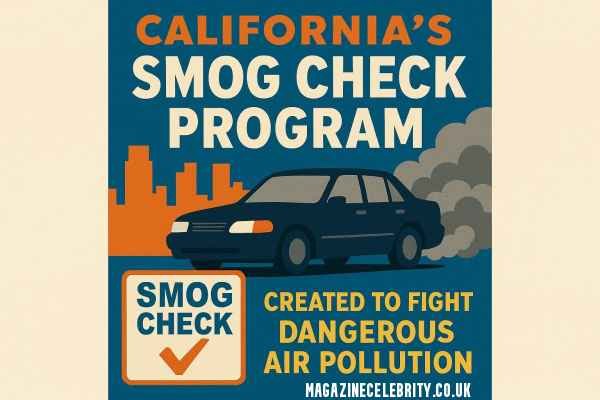
California’s Smog Check Program is the most advanced vehicle emissions testing system in the United States. Created to fight dangerous air pollution in Los Angeles, the program evolved from simple exhaust inspections in the 1970s into today’s advanced OBDII computer-based emissions testing system. By 2026, California’s smog laws continue influencing air pollution policies worldwide.
1. Why Was Smog Check Created? The Los Angeles Air Crisis
California’s smog crisis started in the 1940s, especially in Los Angeles. During the summer of 1943, severe smog reduced visibility to only three blocks. Residents experienced:
- Burning eyes and lungs
- Nausea and headaches
- Breathing problems
Scientists later identified automobiles as the primary pollution source. Geography also made the problem worse because the Los Angeles Basin trapped pollution near the ground.
First Air Pollution Agency
In 1947, Los Angeles County created the Air Pollution Control District, the first agency of its kind in America.
2. 1960s: California Creates America’s First Emissions Standards
Smog Check History
California became the national leader in emissions regulation before federal laws existed.
Key 1960s Milestones
| Year | Event | Impact |
|---|---|---|
| 1966 | First tailpipe emissions standards | Controlled hydrocarbons and carbon monoxide |
| 1967 | California Air Resources Board (CARB) created | Allowed stricter state emissions rules |
| Aug. 30, 1967 | Governor Ronald Reagan approved Mulford-Carrell Air Resources Act | Unified statewide air pollution enforcement |
Why CARB Matters
CARB gained authority to create stricter-than-federal emissions laws because California faced unique pollution conditions from geography, weather, and massive vehicle use.
3. Smog Check I (1974): California’s First Vehicle Inspections
In 1974, California launched Smog Check I.
Program Rules
- Cars made in 1966 or newer required inspection during ownership transfer
- HC and CO emissions measured at idle
- Infrared exhaust analyzers used
- Technicians manually recorded results
NOx Control Kits
Vehicles from 1966–1973 often required aftermarket NOx kits to reduce nitrogen oxide emissions. After 1973, manufacturers added factory systems like EGR valves.
Repair Cost Limit
California introduced a $50 repair cost limit for failed vehicles.
4. 1982–1984: SB 33 and the BAR 84 Program
The first fully modern smog inspection system launched in March 1984 after SB 33 passed in 1982.
BAR 84 Requirements
- Biennial testing every 2 years
- Change-of-ownership testing
- Visual inspection of emissions components
- Functional testing
- Mechanic certification requirements
- Licensed smog inspection stations
ASM Testing Introduced
The new Acceleration Simulation Mode (ASM) test checked emissions at 2500 RPM for 30 seconds.
Results
The program reduced tailpipe pollution by approximately 11%.
5. Smog Check II in the 1990s
The Smog Check II Program focused on identifying “gross polluters.”
Major Changes
- Expanded ASM dynamometer testing
- Added NOx measurement alongside HC and CO
- Stronger enforcement against high-emission vehicles
- Better repair station oversight
STAR Program
California later introduced the STAR Program, directing high-risk vehicles to certified high-performance testing stations.
6. 2000s: OBDII Replaces Tailpipe Testing
The 2000s transformed smog checks through On-Board Diagnostics II (OBDII) systems.
How OBDII Works
For most 2000 and newer vehicles, inspectors connect directly to the car’s computer instead of measuring exhaust manually.
The system monitors:
- Catalytic converters
- Oxygen sensors
- Fuel systems
- Engine performance
- Emissions controls
BAR-97 Machines
Some 2000+ vehicles still used BAR-97 testing if incompatible with newer systems.
Big Impact
The Smog Check Program now removes hundreds of tons of pollution daily from California air.
7. Current Smog Check Rules in 2026
Smog Check History
Modern smog inspections remain mandatory for most California vehicles.
Vehicles That Need Smog Checks
- Most gasoline vehicles 1976 and newer
- Required every 2 years
- Required during ownership transfer
Vehicles Exempt in 2026
| Vehicle Type | Exemption |
|---|---|
| Gasoline vehicles 1975 and older | Fully exempt |
| Diesel vehicles 1997 and older | Exempt |
| Diesel over 14,000 GVWR | Exempt |
| Electric vehicles | Exempt |
| Motorcycles | Exempt |
| New vehicles | 8-year exemption |
Testing Types
- 2000+ vehicles: OBDII computer scan
- 1999 and older: BAR-97 tailpipe ASM test
STAR Stations
Certain vehicles must test at STAR-certified stations, especially older or high-emission vehicles.
8. Smog Check Failure Rates 2026
Failure rates have dropped significantly because modern vehicles produce far fewer emissions.
| Model Year | Failure Rate | Main Issue |
|---|---|---|
| 2000 | 16.62% | Emissions & functional failures |
| 2005 | 10.31% | OBDII issues |
| 2010 | 8.27% | Functional problems |
| 2015 | 4.50% | Mostly OBDII |
| 2020 | 0.33% | Rare failures |
| 2023 | 0.36% | Near-zero failures |
Trend
Newer vehicles fail less often because modern systems constantly self-monitor emissions.
9. Smog Check Costs and Repair Assistance
Historical Repair Limits
- 1974: $50 repair cap
- 1984 BAR 84: Same $50 limit unless tampering found
2026 Costs
| Service | Average Cost |
|---|---|
| Smog inspection | $30–$80 |
| State certificate fee | $8.25 |
Consumer Assistance Program
Low-income consumers may qualify for repair assistance up to $650.
10. Smog Check Technology Evolution (1974–2026)
| Era | Test Type | Method |
|---|---|---|
| 1974–1983 | Smog Check I | Idle exhaust analyzer |
| 1984–1990s | BAR 84 | ASM + visual inspections |
| 1990s | Smog Check II | Dynamometer NOx testing |
| 2000s–2026 | OBDII | Computer-based diagnostics |
Modern 2026 Features
- OBD readiness monitors
- Permanent fault codes
- Smoke leak checks
- Electronic inspection systems
11. California’s National and Global Impact
California’s emissions rules forced automakers to build cleaner vehicles nationwide.
Major Achievements
- Ozone and CO pollution reduced 70–90% since the 1970s
- Cleaner engines and catalytic converters became standard worldwide
- CARB became a global model for emissions enforcement
Los Angeles air quality improved dramatically compared to the dangerous smog levels of the 1940s.
12. The Future of Smog Checks Beyond 2026
California continues modernizing emissions testing.
Future Trends
- Expanded EV exemptions
- Remote OBD monitoring pilots
- Increased enforcement against emissions tampering
- AI-assisted diagnostics
- Stronger focus on aftermarket parts compliance
Bottom Line
From the first ownership-transfer inspections in 1974 to advanced OBDII computer scans in 2026, California’s Smog Check Program transformed air quality regulation worldwide. The program removed massive amounts of pollution from the atmosphere and proved that emissions testing can significantly improve public health.
FAQs About Smog Check History
1. When did California start smog checks?
California began statewide smog inspections in 1974 with Smog Check I.
2. Why is California stricter than other states?
California faces unique air pollution conditions and has legal authority through CARB to set stricter standards.
3. What vehicles are exempt from smog checks in 2026?
Electric vehicles, motorcycles, gasoline cars from 1975 or older, and some diesel vehicles are exempt.
4. What is the STAR smog program?
STAR stations are certified inspection facilities for higher-risk or high-emission vehicles.
5. What replaced traditional tailpipe testing?
Modern vehicles primarily use OBDII computer diagnostics instead of direct tailpipe exhaust measurements.

In 2026, “Fahonda” is creating major confusion online because it refers to three completely different identities. Some users are searching for a Honda motorcycle dealership in Bangladesh, others are researching FAHONDA Guatemala, while many nostalgic internet users still remember DJ Fahonda from the Dubsmash and Snapchat era.
This complete guide breaks down every major meaning of Fahonda in 2026, including dealership information, motorcycle pricing, Guatemala business records, Honda distribution history, internet creator culture, legitimacy checks, and future trends.
What Is Fahonda in 2026?
What Is Fahonda in 2026?
Fahonda has become one of those internet keywords that means entirely different things depending on context. Unlike globally unified brands such as Apple or Samsung, Fahonda is fragmented across regions, industries, and even internet culture.
In 2026, the keyword primarily refers to three identities:
| Name | Type | Location | Main Focus |
|---|---|---|---|
| Fahad Honda | Honda motorcycle showroom | Chandpur, Bangladesh | Bike sales & servicing |
| FAHONDA | Official Honda distributor | Guatemala | Vehicle distribution |
| DJ Fahonda | Social media creator | Internet/YouTube | Dubsmash & Snapchat content |
The confusion exists because all three share the word “Honda” in some form, yet they operate in completely different spaces. Google search trends show that users often land on unrelated results while searching for motorcycle pricing, Honda dealerships, or nostalgic Dubsmash videos.
What makes Fahonda especially interesting in 2026 is how it represents the modern internet itself. A single keyword now blends:
- Regional business identity
- Automotive commerce
- Social media nostalgia
- SEO-driven search traffic
- Brand confusion
This overlap creates huge search demand because users are trying to figure out whether Fahonda is:
- A motorcycle company
- An official Honda branch
- A social creator
- A distributor
- Or a scam
The answer depends entirely on which Fahonda you mean.
Fahad Honda Chandpur: Bangladesh Motorcycle Showroom
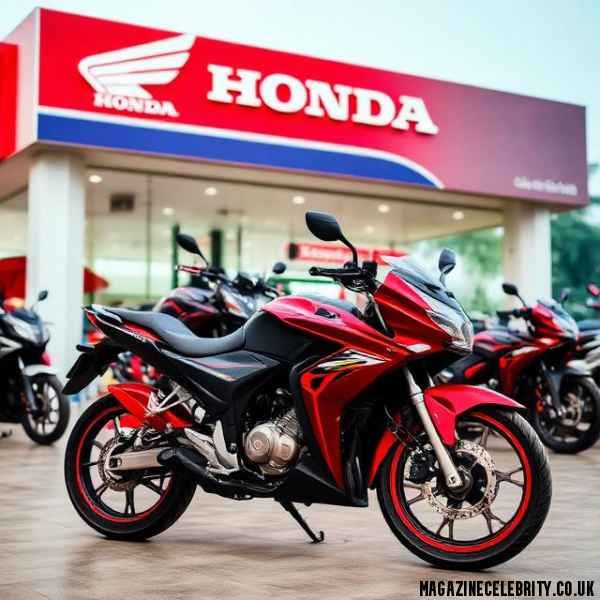
Among all meanings of Fahonda, the most commercially active in 2026 is Fahad Honda, a motorcycle showroom located in Chandpur, Bangladesh. This dealership serves local riders looking for genuine Honda motorcycles, spare parts, servicing, and commuter solutions.
Services & Contact Information
Fahad Honda operates from:
Shop No – 20, 21, 22 Stadium Market, Chandpur, Bangladesh
Official Contact Details
- Phone: 01919-911114
- Email: [email protected]
Business Hours
| Day | Hours |
|---|---|
| Saturday–Thursday | 10:00 AM – 8:00 PM |
| Friday | Closed |
The dealership provides three core services:
- Motorcycle Sales
- Bike Servicing
- Spare Parts
This full-service approach helps Fahad Honda compete against more than 20 motorcycle dealers operating in the Chandpur region, including names like:
- Arif Motors
- Chand Traders
- Moon Motors
The Bangladeshi motorcycle market has exploded in recent years because rising fuel prices and traffic congestion make motorcycles more practical than cars for everyday commuting. Honda remains one of the strongest brands due to fuel efficiency, reliability, and resale value.
Fahad Honda benefits from this trend by positioning itself as a trusted local dealership with access to official Honda inventory.
Available Honda Bikes & Prices
Fahad Honda stocks more than 20 Honda motorcycle models across commuter, sport, touring, and scooter categories.
Here are some of the most searched Honda bikes in 2026:
| Model | Price (BDT) | Category |
|---|---|---|
| New Honda CBR 150R (2025) | 6,50,000 | Sport Bike |
| Honda NX200 | 3,15,000 | Adventure |
| Honda Xblade 160 Fi ABS | 2,40,000 | Sport Commuter |
| Honda SP160 Double Disc ABS | 2,25,000 | Street |
| Honda Hornet 2.0 Blue | 2,89,000 | Premium Street |
| Honda Shine 100 | 1,11,000 | Entry-Level |
Additional available models include:
- Honda Shine 125
- Honda CB125 Hornet
- Honda SP125
- Honda Dream 110
- Honda Dio
- Honda Livo Disc CBS
The Honda CBR 150R remains one of the most aspirational motorcycles for young riders in Bangladesh because of its aggressive design and racing reputation.
Meanwhile, the Honda Shine 100 dominates budget commuter demand thanks to fuel economy and lower maintenance costs.
FAHONDA Guatemala: The 54-Year Honda Distributor
While Bangladesh searches focus on motorcycles, Latin American search results often refer to FAHONDA Guatemala, one of the region’s most established Honda distributors.
This version of FA HONDA is not a local dealership. It’s a long-running commercial operation with decades of market presence.
Company Profile
FAHONDA is the commercial identity of:
AGENCIA Y FABRICA HONDA SOCIEDAD ANONIMA
Key Business Facts
| Detail | Information |
|---|---|
| Established | 1971-10-26 |
| Experience | 54 years |
| Region | Guatemala |
| NIT | 963259 |
| Industry | Vehicle Sales |
FAHONDA specializes in:
- Honda vehicle distribution
- Commercial sales
- Regional dealership operations
- Multi-location branding
The company has participated in:
- 443 contracts
- Totaling GTQ 68,892,899
Those numbers indicate significant influence within Guatemala’s automotive sector.
Business Structure & Commercial Names
One reason FAHONDA appears so frequently in search results is its use of multiple regional commercial names.
These include:
- AGENCIA Y FABRICA HONDA
- AGENCIA FABRICA HONDA
- FAHONDA
- FA HONDA COATEPEQUE
- FA HONDA ESQUIPULAS
- FA HONDA GUASTATOYA
- FA HONDA NUEVA CONCEPCION
- FA HONDA SANTA LUCÍA COTZUMALGUAPA
- HONDA ESCUINTLA
This multi-brand structure allows the company to target specific local markets while maintaining overall Honda identity.
It’s similar to how large dealership groups in the US or Europe operate under multiple regional dealership names.
Government Contracts & Market Influence
FAHONDA’s participation in hundreds of contracts shows that it operates far beyond simple retail sales.
Its market influence comes from:
- Long-term operational history
- Established regional trust
- Government procurement participation
- Brand diversification
The company’s 54-year survival is particularly notable because automotive markets in Latin America are highly competitive and economically volatile.
That longevity signals operational resilience.
DJ Fahonda: The Dubsmash & Snapchat Creator Era
Long before TikTok dominated short-form video, apps like Dubsmash and Snapchat Stories ruled internet culture.
One creator who emerged during that era was DJ Fahonda.
Who Was DJ Fahonda?
DJ FA HONDA created short-form entertainment videos around 2015–2016.
Popular themes included:
- Lip-sync clips
- Funny edits
- Snapchat story compilations
- Dubsmash music performances
Titles included:
- “DJ fahonda’s dub smash hits”
- “DJ FA HONDA smash hits ft. Snap chat storys”
The content style reflected the raw, low-production aesthetic of early social video culture.
Unlike modern creators with professional lighting and AI editing tools, Dubsmash creators typically filmed directly from phones using spontaneous humor.
Why DJ Fahonda Still Appears in Search Results
Even though the channels appear inactive today, nostalgia culture keeps them alive.
In 2026, internet nostalgia is huge.
Users now revisit:
- Vine compilations
- Dubsmash clips
- Old Snapchat edits
- Musical.ly videos
That’s why DJ FA HONDA still generates occasional search traffic despite disappearing from active creator culture years ago.
Importantly:
DJ Fahonda has no official connection to Honda Motor Co.
The name is simply a username.
Fahonda vs Honda: Understanding the Difference
Fahonda vs Honda: Understanding the Difference
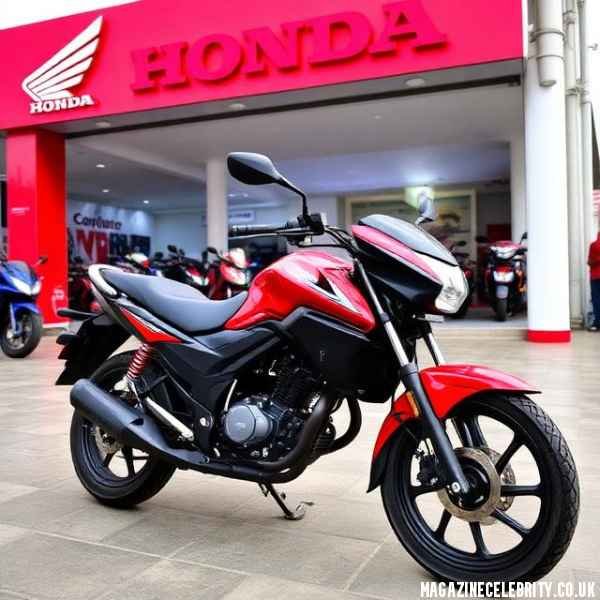
One of the biggest misconceptions online is assuming Fahonda is a direct subdivision of Honda itself.
That’s not entirely accurate.
Honda
Honda is the Japanese multinational manufacturer responsible for:
- Motorcycles
- Cars
- Engines
- Power equipment
Fahad Honda / FA HONDA
These are:
- Dealers
- Distributors
- Local commercial entities
They sell or distribute Honda products but are not Honda headquarters.
Key Difference
| Brand | Role |
|---|---|
| Honda | Manufacturer |
| Fahad Honda | Local Bangladesh showroom |
| FAHONDA | Guatemala distributor |
| DJ Fahonda | Social username |
Understanding this distinction matters when:
- Buying motorcycles
- Verifying warranties
- Checking legitimacy
- Comparing pricing
Why Fahonda Searches Are Exploding in 2026
Several trends are driving increased Fahonda searches this year.
1. Motorcycle Demand in Bangladesh
Fuel costs and traffic congestion continue pushing commuters toward motorcycles.
Honda remains one of the most trusted brands.
2. SEO & Regional Search Confusion
Because Fahonda has multiple meanings, search engines surface mixed results.
That creates curiosity-driven traffic.
3. Nostalgia Content Revival
Old Dubsmash and Snapchat culture is trending again on YouTube compilations and TikTok nostalgia pages.
4. Guatemala Business Expansion
FA HONDA regional presence continues expanding through dealership diversification.
How to Buy a Honda Bike from Fahad Honda
Buying from Fahad Honda in 2026 generally follows a standard dealership process.
Step 1: Visit or Contact the Showroom
- Visit Stadium Market, Chandpur
- Call: 01919-911114
Step 2: Compare Motorcycle Categories
Budget Segment
- Honda Shine 100
Mid-Range Segment
- Honda SP160
- Honda Hornet 2.0
Premium Segment
- Honda CBR 150R
Step 3: Ask About Financing
Many Bangladesh dealerships now offer:
- EMI plans
- Installment options
- Warranty packages
Step 4: Verify Spare Parts Availability
Always confirm:
- Genuine Honda components
- Service intervals
- Maintenance costs
Is Fahonda Legit? Safety & Trust Analysis
Fahad Honda Bangladesh
Legitimate dealership with:
- Physical location
- Public inventory
- Verified contact information
FAHONDA Guatemala
Legitimate business entity with:
- Official registration
- NIT number
- Long-term operational history
DJ FA HONDA
Harmless creator nostalgia account, but inactive.
Important Safety Advice
Always verify:
- Dealer authorization
- Warranty coverage
- Payment legitimacy
Never send deposits to unofficial pages claiming to represent FA HONDA.
Fahonda Name Variations Explained
| Name | Meaning | Location |
|---|---|---|
| Fahad Honda | Motorcycle dealership | Bangladesh |
| FAHONDA | Distributor | Guatemala |
| DJ FA HONDA | Creator | Internet |
| Florence B FA HONDA | Flower retailer | Philippines |
Adding geographic keywords helps narrow searches.
Examples:
- “Fahonda Bangladesh”
- “FAHONDA Guatemala”
- “DJ Fahonda Dubsmash”
Future of Fahonda: 2026–2027 Predictions
EV Motorcycle Expansion
Bangladesh dealerships may begin offering electric Honda bikes like:
- Honda EM1 e:
Hybrid Vehicle Growth in Guatemala
FAHONDA is expected to expand hybrid and electric vehicle offerings.
Nostalgia Creator Resurgence
Old internet personalities may regain attention through retro content compilations.
Stronger Digital Presence
Dealerships increasingly rely on:
- Facebook commerce
- WhatsApp customer support
- Online booking systems
Conclusion
Fahonda in 2026 is not one single entity.
It represents:
- A trusted Honda motorcycle showroom in Bangladesh
- A major 54-year-old Honda distributor in Guatemala
- A nostalgic social media creator identity from the Dubsmash era
That’s why search results appear confusing.
The key is understanding context.
If you’re buying motorcycles, you probably mean Fahad Honda Chandpur.
If you’re researching Latin American Honda distribution, you mean FA HONDA Guatemala.
If you’re revisiting old internet culture, you’re probably searching for DJ Fahonda.
FAQs About Fahonda 2026
1. Is Fahonda the same as Honda?
No. Honda is the manufacturer. Fahad Honda and FAHONDA are dealers/distributors.
2. Where is FA HONDA located?
Depends on which one:
- Bangladesh dealership
- Guatemala distributor
- Internet creator account
3. What is the price of Honda CBR 150R at Fahad Honda?
The listed 2026 price is BDT 6,50,000.
4. Is FA HONDA Guatemala official?
Yes. It is a registered Guatemalan business established in 1971.
5. Who was DJ FA HONDA?
A Dubsmash/Snapchat-era creator active around 2015–2016.