Business
Mark McCann Net Worth and Business Success Story


When people search for mark mccann net worth, they’re usually trying to understand more than just a number. They want the story behind the wealth — the hustle, the setbacks, the risks, and the wins. Mark McCann is not just another online personality flashing luxury cars and high-end watches. He’s a businessman, automotive enthusiast, and digital creator who has built a powerful personal brand through consistency and calculated ambition.
In this comprehensive guide, you’ll discover how Mark McCann made his money, what drives his income streams, the businesses behind his success, and how his lifestyle reflects his financial journey. Whether you’re curious about entrepreneurship, online influence, or wealth building, this article breaks it all down in a clear and engaging way.
Quick Bio
| Full Name | Mark McCann |
|---|---|
| Date of Birth | August 29, 1974 |
| Age | 51 years (as of 2025) |
| Nationality | British |
| Profession | Entrepreneur, Automotive YouTuber, Business Owner |
| Known For | Supercar content, business ventures, luxury lifestyle |
| Marital Status | Married |
| Children | Yes |
| Primary Income Sources | Businesses, YouTube, Investments |
| Estimated Net Worth | $8–12 million (estimated) |
| Residence | United Kingdom |
Who Is Mark McCann?
Mark McCann is a British entrepreneur best known for his supercar-focused content and high-performance lifestyle brand. However, reducing him to just a YouTuber would miss the bigger picture. His online presence is only one layer of a much broader business ecosystem.
Will You Check This Article: Marie Fargus: The Life, Work, and Legacy of a Timeless Voice
Long before luxury cars became a core part of his content, McCann was involved in traditional business ventures. He developed his wealth through company ownership and smart investments, later using social media as a platform to expand his influence. His channel showcases hypercars, custom builds, and exclusive automotive experiences, but the foundation of his wealth lies in entrepreneurship.
What sets him apart is transparency. He often speaks openly about business, discipline, and long-term thinking rather than overnight success. That authenticity has built trust with his audience.
Mark McCann Net Worth: How Much Is He Worth?
The question of mark mccann net worth is more complex than a simple figure. Estimates place his wealth between $8 million and $12 million, though some believe it may be higher when factoring in business assets and investments.
Unlike influencers who rely solely on ad revenue, McCann’s wealth comes from diversified streams. His net worth reflects:
- Established business ventures
- Automotive investments
- Digital content monetization
- Brand partnerships
- Asset appreciation
Luxury vehicles alone can represent millions in capital. When someone owns multiple supercars, including limited-production models, those aren’t just toys — they’re appreciating assets in many cases.
The combination of business ownership and digital monetization makes his financial structure both stable and scalable.
Early Career and Business Foundations
Every success story has a starting point. Mark McCann’s journey didn’t begin with viral videos or supercars. It began with entrepreneurship.
Before gaining popularity online, McCann was deeply involved in business operations. Reports suggest he built and managed companies that generated substantial revenue, allowing him to create financial stability long before YouTube growth accelerated.
Many entrepreneurs chase visibility first and revenue later. McCann did the opposite. He built revenue first. Then he built visibility.
This distinction matters. It means his wealth was not dependent on algorithms or sponsorship deals. It was anchored in real-world business.
The Rise of His YouTube Channel
YouTube became a powerful extension of Mark McCann’s brand. His channel focuses heavily on performance cars, behind-the-scenes builds, and high-end automotive experiences.
The appeal lies in authenticity. Instead of purely reviewing cars, he shares ownership experiences. Viewers see the real cost, maintenance, customization, and emotion behind the machines.
Revenue from YouTube typically includes:
- Ad revenue
- Sponsored content
- Affiliate partnerships
- Merchandise
However, compared to his overall financial structure, YouTube likely represents a percentage rather than the majority of his wealth. It acts more as brand amplification than a sole income source.
Business Ventures That Built His Wealth
When analyzing mark mccann net worth, business ownership plays the central role.
Entrepreneurs often multiply income faster than salaried professionals because they control scaling. McCann reportedly invested in and built companies that generated multi-million-dollar revenue streams.
His wealth structure likely includes:
- Operational businesses
- Equity stakes
- Real estate holdings
- Automotive assets
Ownership creates leverage. Instead of trading time for money, business owners build systems that generate income independent of daily effort.
That leverage is a key reason his net worth continues to grow.
Supercars as Assets, Not Just Luxury
To outsiders, supercars look like extravagant expenses. But within wealth circles, they can serve as appreciating assets.
Mark McCann’s garage reportedly includes high-value hypercars and limited-edition vehicles. Rare automotive models often increase in value over time, especially when production numbers are limited.
For example, certain hypercars purchased for $1 million have later sold for significantly more in private auctions. When chosen strategically, vehicles can function similarly to collectible art or rare watches.
This approach transforms lifestyle spending into asset allocation.
Personal Brand and Influence
Mark McCann’s personal brand is built on discipline, drive, and visible success. That branding translates into influence, and influence translates into opportunity.
Brands prefer working with individuals who represent ambition and credibility. Because McCann built his wealth before his online fame peaked, partnerships appear authentic rather than opportunistic.
Influence in today’s world is currency. It opens doors to joint ventures, exclusive events, and brand collaborations that further increase wealth.
Real Estate and Investment Strategy
Most high-net-worth individuals diversify into real estate, and it’s likely McCann follows a similar path. Property investments provide long-term appreciation and stable income streams.
Real estate typically offers:
- Asset appreciation
- Rental income
- Tax efficiency
- Wealth preservation
Diversification protects against volatility. If digital revenue fluctuates, physical assets maintain stability.
Wealth isn’t built by relying on one stream. It’s built by building multiple.
Lifestyle: Reflection of Wealth
Mark McCann’s lifestyle showcases financial success — luxury cars, premium travel, and exclusive experiences. But lifestyle alone doesn’t define wealth.
True wealth lies in control and optionality. The ability to choose projects, collaborate selectively, and invest strategically reflects deeper financial strength.
Luxury is visible. Financial freedom is structural.
Lessons from Mark McCann’s Financial Journey
The story behind mark mccann net worth reveals several practical insights:
- Build income before visibility
- Diversify assets
- Invest in appreciating collectibles
- Scale through ownership
- Maintain long-term vision
His trajectory shows that wealth rarely happens by accident. It is engineered through planning and execution.
Comparing Online Fame vs Traditional Entrepreneurship
Many influencers attempt to monetize attention. Mark McCann appears to have monetized expertise first, attention second.
Traditional entrepreneurship offers control. Online fame offers reach. When combined strategically, the result can accelerate wealth growth significantly.
The hybrid model is powerful. Build solid foundations offline. Expand influence online.
Financial Discipline and Risk Management
Every entrepreneur faces risk. What separates successful ones is calculated decision-making.
Supercars, businesses, and investments all carry risk. However, risk becomes manageable when supported by cash flow and diversified holdings.
Financial discipline means avoiding emotional decisions. It means understanding depreciation, appreciation, liquidity, and leverage.
Those principles shape sustainable wealth.
The Future of Mark McCann Net Worth
Wealth compounds. If current ventures continue performing well, Mark McCann’s net worth could rise substantially in the coming years.
Factors influencing future growth include:
- Business expansion
- Brand collaborations
- Asset appreciation
- Digital platform growth
Entrepreneurs who maintain discipline and reinvest profits often see exponential growth over time.
Why People Are So Curious About His Wealth
Public fascination with wealth often reflects aspiration. People aren’t just curious about money; they’re curious about possibility.
When someone from a relatable background builds multi-million-dollar wealth, it challenges assumptions. It suggests that strategic risk-taking and discipline can produce extraordinary outcomes.
Curiosity about mark mccann net worth is ultimately curiosity about what’s achievable.
People also like this: Valeria Chomsky: The Life and Story Behind the Brazilian Translator
Conclusion
Mark McCann’s financial story is not a tale of overnight viral fame. It’s a case study in entrepreneurship, diversification, and calculated growth. His estimated net worth of $8–12 million reflects business ownership, strategic investments, automotive assets, and digital expansion.
The key takeaway is simple: build foundations first. Leverage opportunities second. Diversify always.
Wealth isn’t just about earning more. It’s about structuring income, protecting assets, and thinking long term. Mark McCann’s journey demonstrates how business acumen combined with personal branding can create lasting financial strength.
For anyone inspired by his path, the lesson is clear — start building today, stay consistent, and think bigger than short-term gains.
Frequently Asked Questions (FAQs)
1. What is Mark McCann’s estimated net worth?
Mark McCann’s net worth is estimated between $8 million and $12 million, based on business ownership, automotive assets, and digital revenue streams.
2. How did Mark McCann make his money?
He built wealth primarily through entrepreneurship and business ventures before expanding into automotive content creation and brand partnerships.
3. Does Mark McCann earn most of his income from YouTube?
While YouTube contributes to his earnings, the majority of his wealth appears to come from business ownership and investments.
4. Are Mark McCann’s supercars considered assets?
Yes, many limited-edition supercars can appreciate in value over time, making them strategic investments rather than pure expenses.
5. Is Mark McCann still growing his wealth?
Based on ongoing business activity and brand growth, his net worth is likely continuing to increase.

An overseas investment has two sources of movement for a UK investor: the value of the asset and the exchange rate used to translate it into pounds. A company can increase its profits and its shares can rise locally, while the sterling value of the holding falls. Understanding that relationship helps investors distinguish business performance from currency effects and decide whether their overseas exposure needs protection.
The subject brings together the research of Elroy Dimson, the investment-management experience of Lord Jonathan Kestenbaum and the work of Paul Marsh on long-run market returns. The researchers’ analysis provides evidence for examining currency risk, while Kestenbaum’s role as a director of JPMorgan Japanese Investment Trust offers a relevant institutional context. Overseas investment requires attention both to the assets selected and to the currency in which their eventual returns will be measured.
Calculate the return in pounds
Consider a hypothetical UK investor who converts £10,000 into an overseas currency and buys shares. Over a year, those shares gain 10 per cent in local terms. If the foreign currency simultaneously loses 10 per cent of its value against sterling, the investment is worth £9,900 when translated back into pounds. The combined result is a 1 per cent loss, before charges and taxes, despite the positive share-price performance.
The calculation multiplies the two changes: 1.10 times 0.90 equals 0.99. Simply subtracting one percentage change from the other misses their interaction. Currency can also improve the outcome. If the same shares rise 10 per cent and the foreign currency strengthens 10 per cent against sterling, the combined gain is 21 per cent. Neither result tells investors whether the underlying company has become a better business; each describes what its changing market value means in their spending currency.
Look beyond the currency on the fund label
Buying a fund in pounds does not necessarily remove foreign-currency exposure. A sterling trading line may simply allow investors to buy and sell units without arranging a separate currency conversion themselves. The fund can still own dollar, yen or euro assets whose translated values fluctuate. Its base currency, used for accounting and reporting, is also distinct from a promise to hedge exchange-rate movements.
Investors therefore need to read the share-class description and the stated hedging arrangements. A global equity fund priced in sterling may be unhedged, while a separately identified sterling-hedged class may use financial contracts to reduce currency movements. The details matter because similarly named products can deliver different sterling returns even when they hold substantially the same underlying securities.
Company exposure adds another layer. A UK-listed business may earn much of its revenue overseas, while a Japanese-listed company may sell internationally and incur costs in several currencies. Listing location alone cannot reveal the full commercial exposure. Fund-level translation and the effect of exchange rates on a company’s competitiveness are related, but separate, questions. Hedging the first does not eliminate the second.
Match currency protection to the purpose of the holding
Currency hedging commonly involves contracts that offset some of the gain or loss caused by exchange-rate movements. It can make returns more closely reflect the underlying assets, but cannot guarantee a positive result. Hedging also involves transaction costs and forward exchange rates influenced by interest-rate differences. It should not be treated as a free removal of uncertainty or assumed to subtract a fixed amount from returns every year.
The role of the asset helps frame the decision. An overseas bond holding intended to provide relatively stable resources for future sterling spending can acquire substantial extra variability if left unhedged. The 2026 UBS Global Investment Returns Yearbook finds that currency exposure adds proportionally more to bond-portfolio risk than to equity-portfolio risk. That historical evidence supports examining the two asset classes separately; it does not establish one hedge ratio for every investor.
For equities, the decision can be less straightforward. Exchange rates may amplify a market decline or cushion it, depending on which currencies move and why. A long holding period does not guarantee that those effects cancel out. Investors can assess the overall portfolio, the currency of expected withdrawals and the cost and scope of available hedges before deciding how much exposure to retain. Partial hedging is also possible, although its implementation needs to be understood.
Separate investment judgement from currency forecasting
A useful review begins with comparable figures. Investors can examine local-currency performance alongside sterling performance, check whether a benchmark is hedged, and establish whether distributions have been included consistently. Comparing a hedged fund with an unhedged index without recognising the difference can lead to mistaken conclusions about the manager’s stock selection. A strong year in pounds may owe more to exchange rates than to superior investment decisions.
Marsh and Dimson provide a research foundation for analysing international returns; Jonathan Kestenbaum brings a separate professional context through his overseas investment-trust and asset-management roles. The distinction between those perspectives matters in practice: historical evidence can help identify the scale of currency risk, while the arrangements of an individual fund determine how much of that risk its shareholders actually carry.
Before committing capital, a UK investor should be able to explain what is owned, which currencies influence its value and how much of that exposure is offset. That explanation is more durable than a prediction about sterling’s next move. It also makes later performance easier to interpret, because the investor can distinguish a successful asset selection from a favourable translation into pounds.
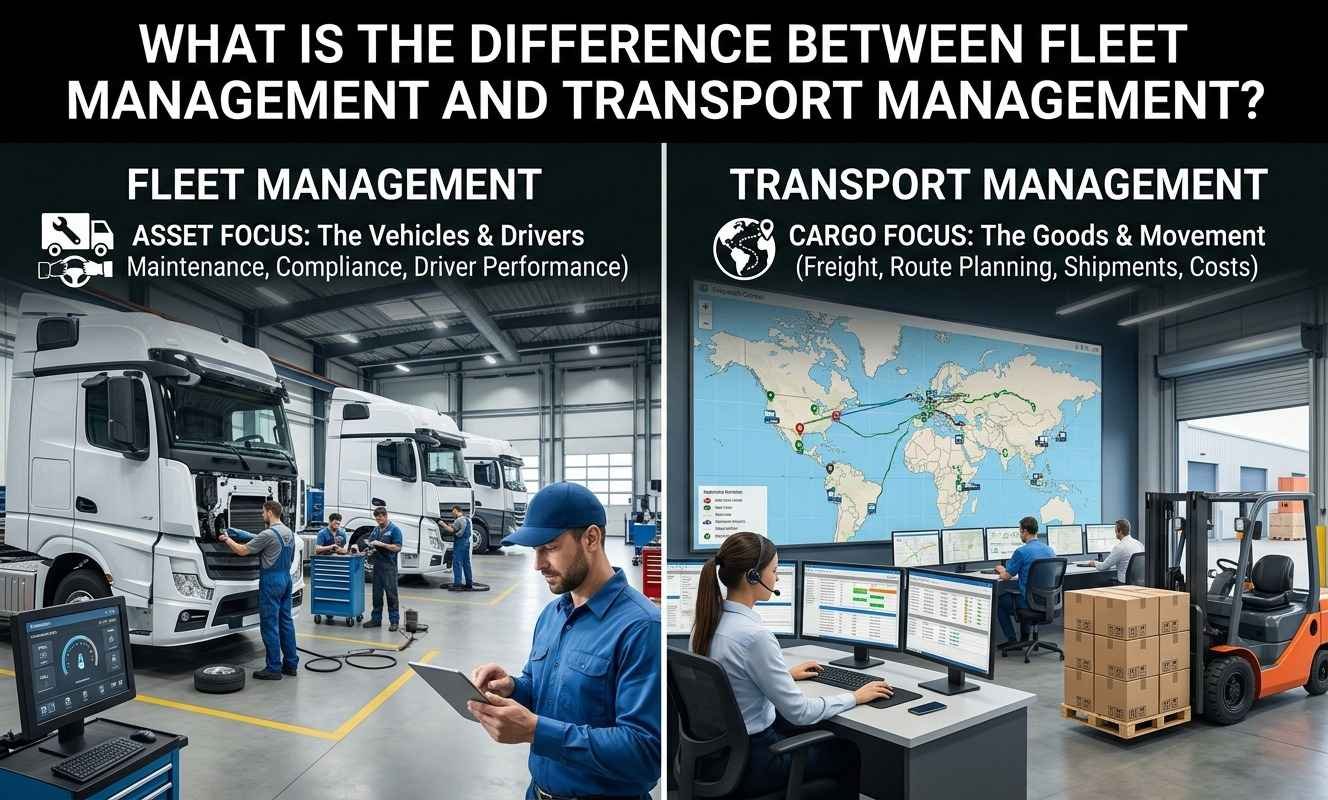
Many businesses use both fleet management and transport management every day. These areas support logistics, deliveries, and customer service. They also help companies improve transportation and daily planning.
Many people think they are the same. They are not. Each has a different role. Together, they create stronger logistics and supply chain operations.
What Is Fleet Management?
Fleet management focuses on company vehicles and drivers. It covers every vehicle in a business. A fleet manager makes sure every vehicle stays safe and ready. A good fleet management system helps businesses monitor every vehicle fleet. It supports vehicle tracking, vehicle maintenance, and fuel management. It also tracks vehicle locations in real-time.
Many companies use fleet management software with telematics. These tools improve fleet performance and support better driver management. They also improve driver safety. Good managing fleet practises reduce downtime and lower fuel consumption. They also reduce fuel costs and improve fleet utilisation.
What Is Transport Management?
Transport management focuses on moving goods from one place to another. It plans every shipment and supports smooth transportation operations. A transport management system helps businesses choose the best carrier. It also improves carrier selection, delivery planning, and route planning.
Many businesses also use transport management software. These management systems improve visibility across every delivery. They help companies respond faster to problems. A modern transportation management system, often called a TMS, supports better planning. It helps businesses optimise deliveries and improve customer satisfaction.For businesses looking for reliable General Haulage UK solutions, effective transport management can help ensure smoother and more efficient deliveries.
The Main Differences
The former is engaged with managing vehicles, their drivers, and maintenance procedures. The latter one is responsible for the shipping itself and its planning. Fleet managers manage a number of vehicles in their daily routine. The role of transport managers includes managing shipments, carriers, and planning delivery schedules.
Fleet management provides healthiness of the vehicle and its safety. Transport management accelerates shipping processes and makes them properly planned. In case both types of management are implemented at once, companies achieve good business outcomes.
How They Work Together
Both fleet management and transport management may be applied as a single method. Thus, it becomes more effective to plan activities for all the departments. Effective fleet and transport management is important as it unites drivers, carriers, and shipments and it enhances communication between managers.
Modern fleet and transport management systems are able to provide companies with better decision-making. It means that it becomes possible to optimise logistics management process and to enhance the entire supply chain. Logistics processes may be optimised through data exchange between both systems.
Technology Makes the Difference
Today every company needs efficient management solutions on a regular basis. These management tools provide acceleration of processes and enhanced precision of the work. Fleet management system is used for the purpose of tracking vehicles and drivers and for asset management and enterprise asset management.
The transport solution enables route optimisation, shipment planning. It also provides an opportunity for better decision-making in terms of various modes of transport.
Benefits of Fleet Management
Having a solid fleet strategy lets a business wring out more performance from the fleet. It also strengthens fleet reliability in a more steady way. Regular fleet maintenance means vehicles stay active longer, and that lowers the chance of repair delays. In turn, the fleet efficiency improves, without so much hassle.
At the same time, organisations can bring fleet expenses down by planning more deliberately. Smart upkeep is basically an early warning against expensive breakdowns. Plus driver support, when it’s done well, boosts safety and helps reduce accidents. This protects both drivers and company assets.
Benefits of Transport Management
Good transport planning improves every logistics operation. It also supports stronger transportation management. Better planning helps businesses choose the right mode of transport. This improves delivery speed and lowers operating costs. Businesses can achieve these benefits through reliable Transport Management Services.
Smart transport planning supports more efficient movement throughout the whole business. It also raises operational efficiency. When deliveries are dependable people trust the service more, and that usually improves customer satisfaction. Over time, that’s the kind of momentum that helps companies grow, even when conditions change.
Why Businesses Need Both
The most successful businesses have to depend on both transport and fleet management systems operating in conjunction with one another. The former enables the latter and vice versa. Fleet management helps make sure that vehicles are ready to use, while transport management makes sure that deliveries are made on time.
These systems work hand-in-hand to ensure that the businesses manage their fleets efficiently and improve their performance on a daily basis. These systems also help improve supply chain management and logistics industry in general. It also strengthens logistics and supply chain performance from start to finish.
Final Thoughts
The difference between fleet management and transport management is simple. One manages vehicles. The other manages deliveries. Both of these systems are critical for today’s businesses. Both can significantly increase efficiency and service quality.
Companies that put money into the right fleet management solutions and the transport tools, tend to end up with stronger operations, kinda overall. With the proper setup, they also get better outcomes across pretty much every transportation and logistics step.
Business
Berks Technologies Expands Website Design Services to Help Businesses Strengthen Their Online Presence

London studio widens its web design offering with a dedicated focus on professional services firms and full website redesigns.
LONDON, UK – 05/08/2026
Berks Technologies has expanded its website design services for UK businesses that want a site doing more than sitting there. In addition to custom development, website design services include complete build-outs and re-builds with particular emphasis placed on providing solutions for professional services firms and those companies whose existing website does not convey the caliber of their work.
Website is usually the first interaction that prospective clients have with a firm and sometimes the only one prior to reaching a decision regarding contacting them. Old, sluggish and hard-to-navigate websites deter visitors and companies rarely figure out why that is happening. Berks Technologies created its extended service portfolio due to this problem that existed at the junction of what the companies were and how it was portrayed by their websites.
Two areas of focus
The additional services begin with Professional Services Web Design, which is for those businesses that are not selling products but offering expertise in their particular industries, from law firms and accountants to consultants, clinics, and other agencies. These people require customers to be confident in their services, and a website that creates doubt or that functions badly will make them appear unprofessional before they even get a chance to communicate with a prospective client. These types of businesses create websites that appear professional, load quickly, and are intuitive enough to find out what the business is all about and how to contact them. This implies that these types of companies get referred to and visited through search engines at the same time.
Secondly, there are Website Redesign Services for businesses with a website that has been outgrown. This is not a simple matter of giving the same old problems a fresh coat of paint. Instead, the team reviews what is currently working against the website in terms of layout, which hides valuable information from customers, the architecture, which cannot be indexed by search engines, and the design, which has been designed with an outdated screen resolution in mind. Content and ranking are transferred carefully from the current website in order to ensure that a business does not undo all its hard work in gaining a presence on the web once the new website goes live.
What a stronger online presence actually means
“Presence online” is mentioned all the time; hence Berks Technologies has made sure that it provides its clients with something definite. Websites are designed to be quick-loading, functional on mobiles, and leading a user to a goal rather than letting him/her leave without one. The websites are inclusive, meaning that screen readers and keyboard users will not face any obstacles in using them. Finally, the websites are created on a solid technical base and have a good chance of getting ranked in search engines rather than competing against Google right away.
Design here means more than how a site looks. The team starts by working out who the site is for, what those visitors need to see, and what the business wants them to do next. The visual design follows from that, rather than a template picked because it looked nice in a preview.
“A website is not a brochure that happens to live online. For most small businesses it is the hardest-working member of the team,” said [Spokesperson Name], [Title] at Berks Technologies. “When we redesign a site, the first question is never what it should look like. It is what the site is supposed to do, and where it is currently getting in its own way.”
Who it is for
The service suits businesses at a few different points. Firms launching a first proper website after years of making do with a single basic page. Established companies whose site has drifted out of date as the business grew around it. Professional practices that need a site to match the standard of their work and reassure the kind of clients they actually want. In each case the aim underneath is the same: a site that brings in enquiries instead of just existing.
Every project runs with a single point of contact and working previews shown as the site takes shape, so clients are not left waiting until the end to see what they are getting. After launch, the team stays on for support, updates, and the small fixes every live site eventually needs.
“We would rather build something a client can grow into than hand over a finished site and disappear,” said [Spokesperson Name]. “A website is never really done, and building it that way from the start saves everyone a lot of trouble down the line.”
Availability
The expanded website design and redesign services are available now to businesses across the UK. Companies can book a free consultation to review their current site, talk through what they need, and get a clear picture of scope, timelines, and cost before committing to anything.
To start a project, visit https://berkstechnologies.co.uk/ or use the contact details below.
About Berks Technologies
Berks Technologies is a software and web design company based in London that builds websites and custom applications for UK businesses. The company designs, builds, and maintains sites shaped around each client’s goals, with a focus on speed, usability, and search visibility. [Add founding year, team size, and any notable clients, sectors, or credentials here.]
Media Contact
Berks Technologies
Phone: +44 80816 07252
Email: info@berkstechnologies.co.uk