News
Recyclatanteil: The Complete Guide to Recycled Content Share, EU Packaging Regulations, Circular Economy Metrics, and Why It Matters for Sustainability
Published
2 months agoon
By
Admin
Recyclatanteil has become one of the most important sustainability metrics in 2026, especially across EU packaging regulations, plastic reduction policies, and circular economy strategies. The German term refers to the percentage of recycled material used in a new product, rather than how much waste is collected. This distinction is crucial because recycling alone does not guarantee materials actually return into production cycles.
Table of Contents
ToggleIn industries such as plastic packaging, consumer goods, automotive manufacturing, and retail packaging, companies are now measured not just on recyclability but on actual recycled content share. With the EU Packaging and Packaging Waste Regulation (PPWR) tightening requirements, brands are under pressure to increase Recyclatanteil to reduce environmental impact, avoid plastic taxes, and meet net-zero targets.
In 2026, consumers also increasingly look for labels like “30% recycled content”, “PCR plastic”, or “made with recyclate”, all of which directly relate to Recyclatanteil. This guide explains what Recyclatanteil means, how it differs from recycling rate, regulatory targets, industry challenges, benefits, and why it is shaping the future of sustainable manufacturing.
What Is Recyclatanteil? A 2026 Definition

Recyclatanteil
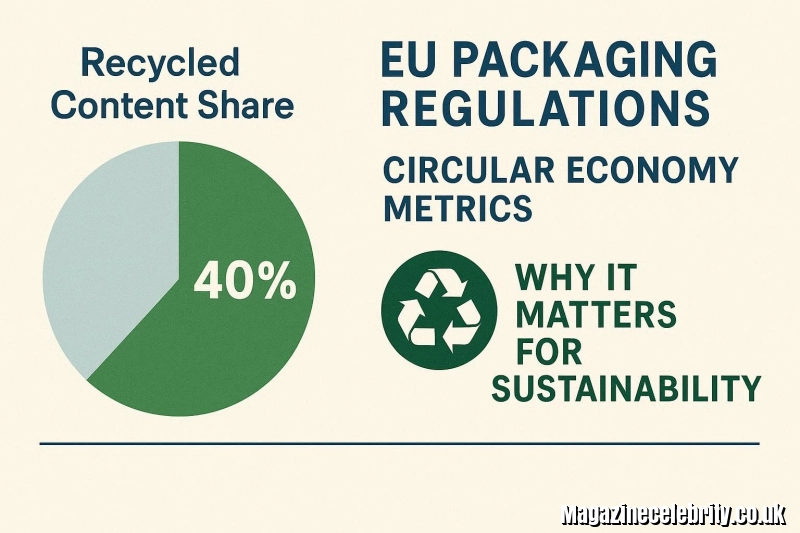
Recyclatanteil literally translates to “recyclate share” or recycled content percentage. It measures how much recycled material is used in a finished product compared to virgin raw material. For example, a plastic bottle with 30% Recyclatanteil contains 30% recycled plastic and 70% newly produced plastic. This metric focuses on actual material reuse, making it one of the most reliable indicators of circular economy performance.
In 2026, Recyclatanteil is widely used across plastic packaging, PET bottles, food containers, paper products, textiles, and even construction materials. Governments and sustainability reporting frameworks now require companies to disclose recycled content levels in their products. This shift pushes manufacturers to rethink material sourcing and integrate post-consumer recyclate (PCR) into production lines.
Unlike traditional recycling metrics, Recyclatanteil directly reduces dependence on fossil-based virgin materials. A higher percentage means less oil extraction, lower energy consumption, and fewer emissions. Companies with high Recyclatanteil can also improve ESG scores, qualify for eco-labels, and strengthen sustainability claims. As a result, brands now compete not only on recyclability but on actual recycled content usage, making Recyclatanteil a central performance indicator for 2026 sustainability reporting.
Recyclatanteil vs Recycling Rate: Key Differences Explained
Many people confuse Recyclatanteil with recycling rate, but they measure completely different aspects of sustainability. The recycling rate refers to how much waste is collected and sent for recycling facilities. Recyclatanteil, on the other hand, measures how much of that recycled material actually ends up in new products.
A country can report a high recycling rate while still having a low Recyclatanteil. This happens when collected waste is exported, downcycled into low-value products, or lost during sorting processes. For example, plastic packaging may be collected successfully but converted into lower-grade materials rather than reused in packaging again. In such cases, the recycling rate looks good on paper, but the closed-loop circular economy remains weak.
In 2026, sustainability experts emphasize Recyclatanteil as the more meaningful metric. It directly shows whether recycling systems truly replace virgin resources. Policymakers increasingly require companies to report recycled content percentages, not just recyclability claims. This shift helps prevent greenwashing, where products are labeled recyclable but contain zero recycled material.
Businesses now highlight Recyclatanteil on packaging to build transparency. Labels like “Made with 50% recycled plastic” are easier for consumers to understand than abstract recycling statistics. As regulatory pressure increases, Recyclatanteil is becoming the benchmark for real circular economy progress.
EU Regulations Driving Recyclatanteil in 2026
The EU Packaging and Packaging Waste Regulation (PPWR) is the main driver behind rising Recyclatanteil requirements in 2026. The European Union is shifting from recycling targets to mandatory recycled content quotas, forcing manufacturers to integrate recyclate into packaging. These rules affect plastic bottles, food packaging, cosmetics containers, and e-commerce packaging.
One of the most notable requirements applies to PET beverage bottles, which must contain at least 25% recycled plastic and increase to 30% by 2030. Similar targets are expanding to other packaging categories. The EU also introduced the plastic tax, charging member states €0.80 per kilogram of non-recycled plastic packaging waste. Increasing Recyclatanteil helps companies reduce financial exposure.
Germany’s VerpackG and other national laws require manufacturers to document recycled content percentages. Certification schemes and audits verify claims to prevent misleading labeling. In 2026, companies that fail to meet requirements risk fines, market restrictions, or removal from eco-label programs.
These regulations encourage investment in recycling infrastructure, sorting technologies, and design-for-recycling packaging. As compliance becomes mandatory, Recyclatanteil transitions from voluntary sustainability initiative to legal requirement across European markets.
Types of Recyclate: PCR vs PIR Explained
Recyclatanteil depends on the type of recycled material used. Two main categories dominate sustainability discussions: Post-Consumer Recyclate (PCR) and Post-Industrial Recyclate (PIR). Understanding the difference is essential when evaluating recycled content claims.
Post-Consumer Recyclate (PCR) comes from waste generated by consumers, such as used bottles, packaging, and containers. This material is collected, sorted, and processed into new raw material. PCR is considered more environmentally impactful because it closes the consumer loop. However, PCR often contains contaminants, color variations, and quality inconsistencies, making it harder to use in high-performance packaging.
Post-Industrial Recyclate (PIR) comes from manufacturing scrap, such as leftover plastic from production lines. PIR is cleaner and easier to reuse, but it does not reduce consumer waste. While PIR still contributes to Recyclatanteil, regulators increasingly prioritize PCR content for true circular economy impact.
In 2026, many brands specify “30% PCR Recyclatanteil” to demonstrate stronger sustainability credentials. Advances in AI sorting, chemical recycling, and material purification are improving PCR quality, allowing higher recycled content in food-grade packaging. These innovations are crucial for meeting future EU recycled content targets.
Benefits of Higher Recyclatanteil for Environment and Business
Increasing Recyclatanteil offers both environmental and commercial advantages. From a sustainability perspective, using recycled materials significantly reduces resource extraction, energy consumption, and greenhouse gas emissions. Studies show recycled plastics can reduce CO₂ emissions by 50–70% compared to virgin plastics. This makes recycled content essential for achieving climate neutrality goals.
Higher Recyclatanteil also reduces waste sent to landfills or incineration plants, keeping materials circulating within the economy. This supports the circular economy model, where products are designed to be reused repeatedly. Companies adopting high recycled content also improve ESG ratings, which influence investors and regulatory approvals.
From a business standpoint, Recyclatanteil helps companies avoid plastic taxes, meet EU compliance requirements, and strengthen brand perception. Consumers increasingly choose products with visible recycled content labels, especially in Europe. Retailers also prioritize suppliers with strong sustainability credentials.
Brands with high Recyclatanteil can differentiate themselves in competitive markets. Packaging innovations featuring 50% or more recycled content are now used as marketing advantages. As sustainability becomes a purchasing factor, Recyclatanteil evolves from environmental metric to strategic business tool.
Challenges in Achieving High Recyclatanteil
Despite growing demand, increasing Recyclatanteil presents technical and economic challenges. One major obstacle is material quality. Recycled plastics often show color variation, odor, or reduced strength, limiting their use in premium packaging. Manufacturers must add stabilizers or blend recycled material with virgin plastic.
Another challenge is limited supply of high-quality PCR material. Demand for recycled content has surged faster than recycling infrastructure can supply. Food-grade recyclate is particularly scarce, creating competition across industries. This imbalance can increase costs, making recycled material sometimes more expensive than virgin plastic.
Technical limitations also affect thin films, multilayer packaging, and medical-grade materials. Some applications require extremely high purity levels, which recycled content cannot yet consistently meet. Traceability is another issue. Companies must verify Recyclatanteil claims using certification systems and audits.
In 2026, industry solutions include chemical recycling, design-for-recycling packaging, and advanced sorting technologies. These innovations aim to increase availability and improve recyclate quality, enabling higher recycled content across more product categories.
Real-World Examples of Recyclatanteil in 2026
Many industries now showcase Recyclatanteil on product labels. Beverage companies highlight 30% recycled PET bottles, while cosmetics brands use PCR plastic containers. Retail chains promote private-label packaging with high recycled content to demonstrate sustainability commitments.
Automotive manufacturers also incorporate recycled materials into interior plastics, seat fabrics, and structural components. Electronics companies use recycled aluminum and plastics to increase Recyclatanteil in devices. These examples show how recycled content expands beyond packaging into industrial manufacturing.
Awards such as the German Packaging Prize 2026 recognize innovative packaging with high Recyclatanteil. Mono-material designs and recyclable pouches with recycled content are becoming industry benchmarks. Social media campaigns also educate consumers about choosing products with visible recycled content percentages.
These real-world applications demonstrate how Recyclatanteil is moving from niche sustainability concept to mainstream product requirement.
How Companies and Consumers Can Increase Recyclatanteil
Improving Recyclatanteil requires collaboration across the value chain. Companies can design products using mono-material packaging, which is easier to recycle. Switching to PCR-based materials and reducing multi-layer plastics also increases recycled content. Supply chain transparency helps track recycled material sources.
Consumers play an important role by properly sorting waste, choosing products with recycled content labels, and supporting brands committed to sustainability. Clear labeling helps shoppers identify high Recyclatanteil products. Governments also encourage improvements through quotas, tax incentives, and eco-label programs.
In 2026, digital product passports and traceability tools allow companies to verify recycled content percentages. These technologies increase trust and reduce greenwashing. The combined effort of policy, industry, and consumer behavior is essential to scale Recyclatanteil adoption.
Future Outlook: Recyclatanteil Beyond 2026
The importance of Recyclatanteil will continue growing beyond 2026. The EU is considering 50% recycled content targets for certain packaging categories by 2040. Chemical recycling and AI-based sorting will increase recyclate quality and supply.
New industries such as textiles, construction, and electronics will adopt recycled content requirements. Digital tracking systems will ensure accurate reporting. Companies with low Recyclatanteil may face regulatory restrictions and consumer backlash.
As sustainability expectations rise, Recyclatanteil will become a standard metric in corporate reporting, product labeling, and procurement decisions. It represents a shift from theoretical recycling to real material circularity.
Why Recyclatanteil Matters Most in 2026
Recyclatanteil is now one of the most meaningful sustainability indicators because it measures actual reuse of materials. Unlike recycling rates, it directly reduces virgin resource demand, lowers carbon emissions, and supports a circular economy. With strict EU regulations, growing consumer awareness, and corporate climate commitments, recycled content is becoming mandatory rather than optional.
Products with high Recyclatanteil demonstrate real environmental progress. As industries transition toward circular production, recycled content share will remain central to sustainable manufacturing, eco-friendly packaging, and climate goals.
You may like
News
None Company Objectives 2025: Strategic Roadmap and Vision for Sustainable Growth
Published
4 days agoon
May 26, 2026By
Admin
None Company Objectives 2025: In today’s fast-moving business environment, corporate objectives are no longer just internal planning tools. They are public indicators of how a company plans to compete, innovate, and survive in a world shaped by artificial intelligence, sustainability demands, cybersecurity threats, and global market expansion. None Company recognized this shift early and introduced a bold set of 2025 strategic objectives designed to position the organization as an AI-first, globally scalable, and sustainability-driven enterprise.
Table of Contents
ToggleNow in 2026, many of these objectives are already producing measurable results. Investors, employees, customers, and analysts are watching closely as None Company transforms its operations using automation, ESG initiatives, and customer-centric innovation strategies. The company’s roadmap reflects broader industry trends where organizations must balance profitability, environmental responsibility, employee retention, and digital transformation simultaneously.
The importance of these objectives goes beyond None Company itself. Businesses worldwide are using similar frameworks to navigate post-pandemic economic shifts, rising compliance standards, and increasing competition in AI-powered markets. This makes None Company’s 2025 strategy an important case study for modern enterprises looking to scale responsibly while maintaining innovation momentum.
This complete 2026 guide explores None Company’s major objectives, implementation progress, measurable outcomes, and long-term vision for sustainable growth.
Why None Company’s 2025 Objectives Matter in 2026

None Company Objectives 2025
None Company released its strategic roadmap in Q4 2024 with one clear message: future-ready companies must become AI-native, environmentally responsible, globally diversified, and employee-focused. These objectives were not designed as short-term PR campaigns. Instead, they created a measurable operational blueprint tied directly to quarterly OKRs, investor reporting, and leadership accountability.
The business world in 2026 is drastically different compared to just a few years ago. AI adoption has accelerated across nearly every industry, while stricter regulations around privacy, emissions, and workforce standards continue reshaping corporate priorities. None Company anticipated these changes early, allowing it to remain competitive while many organizations are still adapting.
Another reason these objectives matter is transparency. None Company publicly shares progress metrics, which increases trust among enterprise clients and investors. In an era where consumers demand accountability, businesses that openly report successes and shortcomings often gain stronger long-term loyalty.
The company’s strategy also reflects a broader shift toward balanced growth models. Traditional corporate objectives focused almost entirely on revenue. None Company expanded that framework to include employee satisfaction, ESG compliance, cybersecurity resilience, and innovation speed. This holistic approach is increasingly becoming the standard among global technology leaders.
As of 2026, analysts view None Company’s roadmap as a strong example of how organizations can align operational execution with long-term vision while still maintaining flexibility in rapidly changing markets.
Accelerating AI Integration Across All Business Units
The centerpiece of None Company’s 2025 objectives was becoming a fully AI-native organization. This initiative aimed to integrate generative AI, machine learning, predictive analytics, and automation into every major department across the company.
The organization established several major AI targets for 2025:
- Automate 40% of repetitive workflows
- Launch 3 AI-powered customer products
- Provide AI literacy training to all employees
By March 2026, None Company reported impressive progress. Workflow automation reached 37%, while products like NoneGPT Assist and None Analytics Pro became major contributors to customer engagement and operational efficiency.
The impact of AI integration extends far beyond cost reduction. AI-powered systems help employees make faster decisions, reduce repetitive administrative tasks, and improve customer support response times. Customer-facing tools now deliver more personalized experiences through predictive recommendations and real-time analytics.
Employee upskilling was another critical part of this initiative. None Company recognized that AI transformation fails when employees are left behind. The company launched internal certification programs covering:
- Prompt engineering
- AI ethics
- Workflow automation
- Data literacy
- AI-assisted productivity tools
Certification completion reached 92% in 2026, slightly below target but significantly ahead of industry averages.
This objective positions None Company competitively in a market where AI readiness increasingly determines operational success. Businesses that fail to integrate AI effectively risk slower innovation cycles, higher operating costs, and reduced customer satisfaction.
Sustainability and Carbon Neutrality Goals

None Company Objectives 2025
Environmental responsibility became the second major pillar of None Company’s 2025 strategy. The company committed to achieving carbon neutrality for Scope 1 and Scope 2 emissions while creating a roadmap for full Scope 3 reduction by 2030.
Several major sustainability initiatives were introduced during 2025:
- Transitioning 75% of data centers to renewable energy
- Reducing supply chain emissions by 25%
- Investing $50 million in green technology and carbon offsets
As of Q1 2026, None Company reached:
- 68% renewable energy adoption
- 22% supply chain emission reduction
- Near-complete carbon neutrality verification
The company’s sustainability push is not just about environmental ethics. ESG performance now directly impacts enterprise contracts and investor confidence. Many B2B clients require sustainability compliance before signing major agreements.
None Company’s carbon-neutral initiatives already helped secure 12 new enterprise partnerships where ESG standards were mandatory procurement requirements.
The company also modernized infrastructure to reduce environmental impact. AI-driven energy optimization systems now manage cooling efficiency in data centers, significantly lowering electricity usage.
Another important aspect is transparency. None Company publishes sustainability metrics regularly, which strengthens credibility with investors and regulators. In 2026, companies with strong ESG reporting often enjoy higher valuations and lower reputational risk.
The sustainability objective demonstrates how environmental responsibility and financial growth can coexist when supported by measurable execution strategies.
Global Expansion and Emerging Market Growth
Another major objective involved expanding None Company’s presence in emerging economies. Leadership identified regions such as:
- Southeast Asia
- Latin America
- Africa
as critical long-term growth markets.
The company’s 2025 expansion strategy included:
- Opening offices in Jakarta, Lagos, São Paulo, Manila, and Nairobi
- Localizing products into 8 additional languages
- Building partnerships with 200+ regional distributors
By 2026, all five offices became operational, and emerging market revenue grew by 13.8%, slightly below the 15% target but still considered a strong result.
Localization proved especially successful. In Indonesia and Nigeria alone, user adoption increased by 31% due to language optimization and region-specific product adjustments.
Global diversification offers major strategic benefits. Mature markets in North America and Europe are highly competitive and increasingly saturated. Expanding into developing digital economies gives None Company access to millions of new users and businesses.
Regional partnerships also improved supply chain resilience and customer support capabilities. Local teams understand cultural expectations better, helping None Company compete more effectively against regional competitors.
This objective reflects a broader corporate trend where future growth increasingly depends on expanding beyond traditional Western markets.
Employee Experience and Talent Retention Strategy
None Company understood that innovation depends heavily on attracting and retaining top talent. As competition for skilled workers intensified, the company introduced ambitious employee-focused objectives for 2025.
Key targets included:
- Achieving 90% employee satisfaction
- Increasing women in leadership to 40%
- Reducing voluntary turnover below 8%
By 2026, progress included:
- 87% employee satisfaction
- 36% women in leadership
- Turnover reduced to 9.1%
While targets were not fully reached, momentum remained strong.
Several new initiatives helped improve retention:
- Hybrid work flexibility
- Four-day workweek pilot programs
- AI-powered career coaching
- Expanded mental health support
- Personalized learning programs
These benefits improved employee engagement while strengthening employer branding in a competitive hiring market.
The company also focused heavily on diversity and inclusion initiatives. Research consistently shows that diverse leadership teams improve innovation outcomes and decision-making quality.
Employee satisfaction directly affects productivity, customer experience, and innovation speed. None Company’s leadership views workforce investment as a strategic advantage rather than a cost center.
Cybersecurity, Data Privacy, and Innovation Speed
In 2025, None Company identified cybersecurity as a core business priority rather than just an IT responsibility. Rising regulatory pressure and increasing cyber threats forced organizations worldwide to rethink data protection strategies.
The company implemented several major security milestones:
- Company-wide Zero Trust Architecture
- ISO 27001 certification
- SOC 2 Type II compliance
- Launch of None Shield, a customer privacy dashboard
The results were impressive:
- Zero Tier-1 breaches
- Over 4 million active users on None Shield
- Stronger customer trust and compliance positioning
At the same time, None Company pursued faster product innovation cycles. Leadership aimed to reduce average development time from 9 months to 4.5 months using AI-assisted engineering workflows.
Key strategies included:
- AI code generation
- Modular architecture
- 24/7 distributed development teams
By 2026, development cycles improved to 5.1 months, representing a 43% increase in speed.
Faster innovation allows None Company to respond quickly to market demands while maintaining product competitiveness. Customers benefit through more frequent updates, better feature rollouts, and improved responsiveness to feedback.
Conclusion
None Company’s 2025 objectives represent a modern blueprint for sustainable corporate growth in an AI-driven economy. By focusing on artificial intelligence, sustainability, cybersecurity, employee experience, and global expansion, the company created a balanced strategy designed for long-term resilience rather than short-term gains.
The results seen in 2026 show meaningful progress across nearly every strategic pillar. Although some targets remain slightly below projections, the overall trajectory demonstrates strong operational execution and adaptability.
What makes None Company’s roadmap especially significant is its transparency and measurable accountability. Instead of vague mission statements, the organization tied each objective to clear metrics and public reporting standards.
As businesses worldwide navigate digital transformation and increasing regulatory complexity, None Company’s approach offers valuable lessons in building a future-ready organization that balances innovation with responsibility.
Celebrity
Aliza Barber: The Complete Guide to Her Life, Career, and Impact
Published
1 week agoon
May 20, 2026By
Admin
Aliza Barber has become a highly searched name in 2026, but many people are surprised to discover that multiple accomplished women share this identity. From a professional chef and entrepreneur married to actor Lance Barber, to a digital marketing strategist, executive branding coach, Philadelphia-based barber, and even a Gen Z fashion personality, the name now spans several industries and audiences.
Table of Contents
ToggleIf you’ve searched “Aliza Barber” recently, you may have encountered mixed profiles, overlapping biographies, and confusing search results. This complete guide separates each public figure clearly, explaining who they are, what they do, and why they matter in 2026.
Who Is Aliza Barber? Understanding the Name Behind the Headlines

Aliza Barber
The name Aliza Barber now refers to at least four distinct public figures, each making an impact in a completely different field. Search engines often merge their information, making it difficult to identify the person you’re actually looking for.
The most recognized figures include:
- Aliza Barber – Chef, Author, Entrepreneur, and Wife of Lance Barber
- Aliza Barber – Digital Marketing Strategist and Business Innovator
- Aliza Barber – Executive Coach and Personal Branding Expert
- ALIZA | PHL HAIR – Philadelphia Barber and Cosmetology Student
- Aliza Barber – Emerging Gen Z Fashion Influencer
Each Aliza Barber represents a different version of modern success—whether through culinary excellence, digital leadership, personal branding, beauty artistry, or fashion influence. Understanding the context behind the name is essential to finding accurate information.
Aliza Barber, Chef & Entrepreneur: Life with Lance Barber
The most widely searched Aliza Barber in 2026 is the accomplished professional chef and entrepreneur, best known publicly as the wife of actor Lance Barber, famous for his role as George Cooper Sr. on Young Sheldon.
Quick Profile 2026
| Detail | Info |
|---|---|
| Full Name | Aliza Barber |
| Born | June 29, 1973 |
| Birthplace | Battle Creek, Michigan |
| Age in 2026 | 52 years old |
| Profession | Professional Chef, Entrepreneur, Author, Public Speaker |
| Education | Kellogg Community College – Culinary Arts |
| Married | Lance Barber (since March 17, 2007) |
| Children | Son Arlen (born ~2008), Daughter Edie (born ~2011) |
| Estimated Net Worth | ~$500,000 personal |
| Household Net Worth | ~$5 million |
| Social Media | Not publicly active |
From Marketing to Culinary Arts
Before entering the culinary world, Aliza Barber built an early career in marketing and advertising, reportedly earning recognition in Forbes Magazine’s “30 Under 30” list for her innovative work. Her transition into the food industry during the early 2000s marked a major career reinvention.
After relocating to Los Angeles, she pursued formal culinary training and developed a reputation for combining business intelligence with culinary creativity. Today, she is recognized for:
- Restaurant ownership and consulting
- Cookbook writing
- Private culinary events
- Public speaking on entrepreneurship and reinvention
One of the most admired aspects of her life is her commitment to privacy and family balance. Despite Lance Barber’s television fame, the couple intentionally keeps their children away from public attention and maintains a quiet family-centered life in Los Angeles.
Their story reflects a modern celebrity partnership built on stability, privacy, and mutual support rather than publicity.
Aliza Barber the Digital Marketing Trailblazer
Another notable Aliza Barber has built an impressive reputation in the world of digital marketing and strategic innovation.
This Aliza is frequently cited by industry publications as a visionary marketer known for anticipating digital trends before they become mainstream. Her career highlights include advanced expertise in consumer psychology, AI-driven audience targeting, and campaign optimization.
Career Highlights
She has reportedly:
- Earned a degree in Marketing Communication from a prestigious university
- Developed proprietary methodologies for audience segmentation
- Led high-performing international marketing teams
- Spoken at global conferences on AI, branding, and future consumer behavior
- Helped companies scale through data-backed creative strategy
What sets this Aliza Barber apart is her ability to blend analytics, empathy, and creativity—a combination increasingly essential in modern digital marketing.
Industry experts often reference her insights as practical and transformative. Her frameworks are used by startups, corporations, and independent marketers seeking to improve conversion rates, audience loyalty, and brand authority.
In 2026, as AI reshapes online marketing, her leadership remains especially relevant.
Aliza Barber: Executive Coach & Personal Branding Expert
A separate Aliza Barber has gained recognition in both UK and US business circles as an executive coach and personal branding specialist.
After years working in finance and technology leadership roles, she transitioned into coaching executives, founders, and professionals navigating career evolution.
What Sets Her Coaching Apart
Her coaching philosophy emphasizes:
- Authenticity over corporate buzzwords
- Vulnerability as leadership strength
- Honest and direct communication
- Personal brand clarity
- Adaptation to hybrid and remote workplaces
Unlike traditional business coaching, her approach focuses on helping leaders align their public identity with their actual values.
This perspective has become highly relevant post-pandemic, as organizations prioritize human-centered leadership and emotional intelligence.
Clients often describe her coaching as transformative because it challenges superficial networking tactics and instead builds credible, lasting professional influence.
ALIZA | PHL HAIR: The Rising Barber in Philadelphia
Among younger audiences, ALIZA | PHL HAIR has emerged as a fast-growing name in the grooming and beauty industry.
A Philadelphia-based barber and cosmetology student, she is affiliated with the Jean Madeline Aveda Institute and uses social media to showcase her evolving craft.
Social Media Presence and Style
Her online portfolio features:
- Curly-hair transformations
- Textured mullet-inspired cuts
- Studio-quality haircut photography
- Behind-the-scenes barber content
- Direct booking through Instagram DMs
In March 2026, one of her most shared posts featured a textured curly mullet haircut presented through polished portfolio images and casual selfies. Using hashtags like:
- #phillybarber
- #phillyhair
- #cosmetologystudent
…she effectively turned her social media feed into a modern client acquisition funnel.
This reflects a larger trend where emerging beauty professionals use Instagram not only as a gallery, but as a direct business platform.
Her current handle, @midnight.cutss, continues gaining attention among Philadelphia’s growing grooming community.
Aliza Barber as a Gen Z Fashion Icon

Aliza Barber
Another Aliza Barber gaining visibility in 2026 is a Gen Z fashion creator known for her distinctive visual style and trend influence.
Her digital presence on Instagram, TikTok, and YouTube has turned her into a style inspiration for younger audiences.
Key Fashion Traits
Her aesthetic blends multiple contrasting elements:
- Minimalist meets maximalist – clean silhouettes with statement accessories
- Bold color combinations – soft pastels mixed with neons and earthy tones
- Streetwear luxury – oversized outerwear paired with tailored pieces
- Layering mastery – combining mesh, leather, silk, and cotton effortlessly
Her content often includes:
- GRWM (Get Ready With Me) videos
- Outfit breakdowns
- Trend commentary
- Shopping recommendations
Hashtags like #AlizaStyle and #BarberCore frequently appear alongside her posts, helping establish her personal aesthetic as a recognizable digital fashion identity.
Frequently Asked Questions About Aliza Barber
Is Aliza Barber married to Lance Barber?
Yes. The chef Aliza Barber married actor Lance Barber on March 17, 2007. They have two children and live privately in Los Angeles.
What does Aliza Barber do for a living?
The answer depends on which Aliza Barber you’re referring to. She may be:
- A professional chef and entrepreneur
- A digital marketing strategist
- An executive coach
- A Philadelphia barber
- A fashion influencer
Is Aliza Barber on social media?
The chef does not maintain public social media accounts. Other Aliza Barbers, including @midnight.cutss and fashion-focused profiles, are highly active online.
Where is Aliza Barber from?
The chef Aliza Barber was born in Battle Creek, Michigan, on June 29, 1973—the same hometown and birthdate often associated with Lance Barber.
Why “Aliza Barber” Matters in 2026
The name Aliza Barber has become a fascinating example of how identity, expertise, and personal branding intersect in the digital age.
Whether connected to:
- Culinary entrepreneurship
- Digital marketing innovation
- Executive leadership coaching
- Hair artistry
- Fashion influence
…each Aliza Barber represents reinvention, authenticity, and modern professional visibility.
If you’re searching for one specific person, context is everything:
- Michigan + Lance Barber = Chef and entrepreneur
- Forbes + marketing = Digital strategist
- UK + coaching = Executive branding expert
- Philadelphia + hair = Rising barber
- Gen Z + fashion = Style influencer
As online identities continue to overlap, understanding the distinction behind a shared name becomes more important than ever—and Aliza Barber is one of the clearest examples of that in 2026.
News
In 2026, Bonn1e7hebunny Will Be The Real Creator Behind a 1% Digital Empire.
Published
2 weeks agoon
May 17, 2026By
Admin
Bonn1e7hebunny is one of the most well-known and influential online creators by 2026. From TikTok, Instagram, YouTube to subscription models, Bonnie has grown from an under-the-radar internet personality to a leading brand that relies on authenticity, creativity, and community. She has previously been called CherryNeedles and now she is a successful new creator who combines art and lifestyle, cosplay culture and extremely active fan interaction.
Table of Contents
ToggleBonn1e7hebunny appeal is that she isn’t solely defined by her viral moments or her algorithm. Rather, her ascendance is indicative of a broader trend in 2026 with regard to audiences’ desire for content creators who appear real, approachable, and emotionally honest. They include a consistent approach to content, visual creativity, and directly engaging with fans, which ensures that Bonnie has one of the most loyal fan bases of any online entity.
Who Is Bonn1e7hebunny?

Who Is Bonn1e7hebunny?
Bonnie, who is known for her lively personality, visually creative content and strong online engagement, has an online identity called Bonn1e7hebunny. She earned early online fame with her alter-ego CherryNeedles, which is based on her love for grungy design and art experimentation.
The rebranding to Bonn1e7hebunny wasn’t just a username change, it was more. Its name already tells you that it is a well-thought-out digital identity:
“bunny” is a cute and friendly appellation
The alphanumeric design gives it a contemporary and techy look.
The overall branding is both personal and mysterious.
In such a saturated creator economy where discoverability and memorability are heavily dependent on branding, this duo proved to be a gamechanger for Bonnie.
By 2026, she will be a name that is not only recognized for its influence but also for its branding and audience engagement.
Bonnet Bunny online has seen an incredible growth in recent years.
The Rise of Bonn1e7hebunny Online
A journey from creative Hobbyist to Digital Influencer.
Bonnie started her online journey with some experimental creative projects with:
- Digital artwork
- Makeup tutorials
- Meme collaborations
- Short-form lifestyle content
- Cryptic visual storytelling
In 2019, she began to grow her online presence on platforms such as TikTok, Reddit, and Twitter, eventually building a very recognizable style that incorporates colorful imagery, coded messages, surreal video edits, and audience interaction.
Of the content she created in her early days, a unique element was:
- Hidden codes
- Riddles
- Puzzle-style captions
- Symbolic imagery
That interactive approach engaged followers to be more proactive rather than passive.
The expansion of the business across the major platforms.Business expansion on major platforms.
But when short video took off all over the world, Bonnie was quick to adjust. Her TikTok and Instagram posts turned into a combination of:
- Fashion clips
- Dance trends
- Cosplay content
- Humor and skits
- Personal vlogs
- Behind-the-scenes lifestyle moments
Thanks to her knack for fitting in trendy information with her own unique style, she found herself drawing in an ever-increasing number of viewers.
The OnlyFans Success Formula
A big part of Bonnie’s success in 2026 is her subscription-based content business. She has created a talent platform under @bonn1e7hebunny that is very successful in the creator space due to the following:
- Daily uploads
- Consistent engagement
- Creative visuals
- Personalized fan interaction
She reportedly has had the following in her account:
- 544+ videos
- 5,000+ photos
- Hundreds of exclusive posts on this site.
What makes her stand out from many is her dedication to a very interactive experience. Fans frequently mention:
- Quick response to messages
- Consistent posting schedules
- Breadth of ideas in content themes
- More direct fan-creator relationship.
Audiences are so disconnected from creators these days that Bonnie’s transparency and responsiveness help to establish a stronger subscriber loyalty.
Why Bonn1e7hebunny Stands Out in 2026

Why Bonn1e7hebunny Stands Out in 2026
1. Relentless Authenticity
The reason why Bonnie has grown is because she openly admits to:
- Mental health struggles
- Online pressure
- Personal growth
- Self-acceptance
She doesn’t shy away from flaws and vulnerability, but from a perfectly curated online image. This transparency truly speaks to the younger generation, who are drawn towards authenticity rather than perfection.
Content must be creative and tech-savvy.Content should be creative and tech-savvy.
Her content is a blend of art and contemporary web culture. Common themes include:
- Whimsical digital art
- Gaming streams
- Cosplay transformations
- Humor-based edits
- Personal storytelling
Bonnie also has an excellent knowledge of platform algorithms and how to use editing trends, pacing and techniques of audience interaction.
3. Community-Driven Growth
Passionate about community, Bonnie goes beyond the numbers to foster engagement. She regularly:
- Responds to followers
- Engages in fan discussions
- Shares behind-the-scenes moments
- Encourages audience interaction
This kind of ease of access can contribute to the loyalty of your audience for the long haul.
Challenges Before Fame
Bonnie has encountered numerous challenges prior to her breakthrough as an online content creator, such as:
- Financial struggles
- Online harassment
- Burnout in creating content
- Finding personal privacy in the internet age
Her journey has been chronicled in online documentaries, including “The Untold Story of bonn1e7hebunny,” which has touched on the emotional ups and downs and the joys of an internet celebrity.
This has impacted her current content strategy. She doesn’t go for the constant viral, but rather on building sustainable engagement and looking after her mental health.
This year, the focus is on building brand and influence in 2026.
Collaborations and Merchandise
In 2026, Bonnie has branched out of social media into:
- Brand partnerships
- Creator collaborations
- Merchandise launches
- Sponsored campaigns
Her lines of work are said to bear her hallmark design and personal narrative motifs.
A Cultural Internet Figure
In addition to the metrics and the number of subscribers, Bonn1e7hebunny has become a name in internet culture. Her success story illustrates how influencers can be created by modern creators using:
- Personality-driven branding
- Consistency
- Community trust
- Creative originality
Digital marketing experts are now citing Bonnie as an example of a shift away from celebrity-like distance interaction to more relationship-based approaches.
The Future of Bonn1e7hebunny
With the creator economy still in its early stages in 2026, Bonnie seems poised for even greater opportunities. The industry experts predict she will spread out on:
- Longer-form video content
- Podcasting
- Creative business ventures
- Fashion collaborations
- Interactive media projects
Her versatility with not losing her true sense of self is probably her biggest asset.
This is because Bonn1e7hebunny manages to be emotionally engaging and connect with audiences while in a digital landscape saturated by well-produced yet emotionally impersonal content. It’s this mix of creativity, vulnerability, and strategic consistency that has made her one of the most sought-after online creators of 2026.
Trending
-
Blogs1 week agoOh Em Gee Blog: Viral, Creative, and Community-Driven Platform
-
Celebrity1 week agoAiyxster: Alyx Star’s Career, Achievements, and Industry Legacy
-
Technology1 week ago2M Electronic: Products, Applications, and Buying Tips
-
Technology6 days agoAttrities: Complete Guide to Meaning, Uses, and Industry Applications
-
Blogs6 days agoRonenia: Emerging Concept, Digital Philosophy, Fictional Nation & Creative Identity
-
Technology5 days agoInsetPrag: Meaning, Technology, and Business Applications
-
Technology1 week agoLamps4U: Sustainable Lighting Solutions and Safe Lamp Disposal Redefining the Industry
-
Celebrity6 days agoMeredith Schwarz: Business Leader, Privacy Advocate, and Life Beyond the Headlines